Showing posts with label Catherine de Medici. Show all posts

Thursday, April 29, 2010

Royals in Miniature

These sculptures by G. S. Stuart have so much character. He seems to capture a touch of wry humor behind each royal. Here are some of my favorite ones:

Anne Boleyn
Just wait until I get my hands on that Jane Seymour


Catherine de Medici
Those kids of mine are exhausting.


Duchess of Kendal
Has someone seen my breakfast?


Caroline of Brunswick
This dress will surely raise my husband's blood pressure

Nell Gwynne
"Pray, good people, be civil — I am the Protestant whore."

Yes, I am sure they don't need my captions, but I couldn't resist. There are plenty more over at this minisite dedicated to George Stuart and you can learn more about the Historical Figures Foundation here.

Let me know which ones are your favorite.

Wednesday, April 7, 2010

Secret Fertility Potions of the Royals

The sun is out. Birds are chirping. Lawn mowers are cutting grass. My window is open and it finally feels like spring. We tend to think of spring as the time babies are born, but that is actually only true for sparrows. For humans, more babies are born in August than any other month presumably making the cold weather more conducive for conception.  No worries. The Raucous Royals is here to offer the following fertility secrets passed down by the royals.

The ancients just didn’t seem to get the whole concept of menopause. Such was the case of Byzantine Empress Zoe in the 11th century who at the age of fifty was forced to tie pebbles to her body, hang fertility amulets around her, and wear chains. By fifty, women have enough problems with things hanging without adding rocks to their body. Poor Zoe. She never did get that baby, but on the positive side, her body was compared to a "well baked chicken" with "every part of her was firm and in good condition." I kind of wish someone would say by giggly post-partum bits look like firm poultry.

Throughout medieval and Renaissance times, when a queen was anointed with the consecrated oil, it was believed this oil guaranteed fertility. Some batches must have gone bad because greasing up didn’t always get the job done. When the first wife of Henry VIII, Catherine of Aragon could not conceive she made a pilgrimage to the shrine of Our Lady Walsingham and donned a hair shirt. She went through all that itchiness and she was still just left with one daughter, the future queen of England Mary Tudor.

Catherine de Medici wins hands down for enduring the most uncomfortable fertility rituals. She applied a poultice of ground antlers and cow dung prescribed by her alchemists. When that didn’t work, she swallowed elixirs of mare’s milk, rabbit’s blood, and sheep’s urine. (gulp). And of course, she ceased all riding of mules because it was well-known that the animal caused sterility. I would be pissed if someone took away my mule!

But don't think the women were having all the fun wallowing in cow dung. Men too had some freakishly weird fertility potions. Ferdinand of Aragon ate bull’s balls to increase his virility. Judging by the amount of mistresses he had, I hardly think he needed it.

Other queens swore by “taking the waters”. Such was the case with Anne of Austria who realized her advancing age and infrequent visits from her husband, Louis XIII, were making her chances of conceiving slim to none.  Miraculously, she conceived Louis XIV after taking the waters in Auvergne and he was born in 1638. Nicole Kidman reportedly swears by these same fertility waters.

Wife of Charles II, Catherine of Braganza was another fan of fertility dips and spent her summers in the fecund waters of Tunbridge Wells and Bath. Unfortunately, she was not as successful giving birth to a healthy baby. I guess the Bath waters did not have the same magic.

During Louis XIV's reign, it’s no wonder how anyone ever got pregnant because women could not have sex one hundred days of the year during Catholic observance days. Soon fertility went hand in hand with some of the wackiest superstitions in history. For example, to get a son, women were instructed to conceive during the waxing moon and to constrict the man’s left testicle. (girls came from the left testicle, boys came from the right). Men were also instructed to work a bit harder because it was believed that a woman’s orgasm increased fertility. (Yey! This one is actually true.) The church advised women to pray to St. Leonard, a hermit who founded a monastery and was the patron saint of prisoners. (Ironic, considering pregnancy often feels like an imprisonment). I do believe in the power of prayer and praying to any saint seems like a far better option then waiting for a waxing moon. I would just pick another saint. Those handcuffs he is holding are kind of scary.

When royals failed to conceive, they also could rely on the old Renaissance card trick - the phantom baby. When Henry VIII’s sister, Mary married the ailing, decrepit King of France, Louis XII, there was little hope for an heir. But without a heir, Mary also had little chance of staying in France and the clock was ticking with her gouty husband. No problem for this Tudor vixen. After Louis’ death, Mary simply wrapped her thin waste in towels and staged an occasional fainting spell. Unfortunately, no one bought the ruse especially the mother of Francis I, Louise of Savoy, who knew her son had a pretty good chance of becoming the next king if there were no visits from Mr. Stork. Louise ordered a full medical examination that turned up with Mary looking much thinner minus her pseudo baby bump. Shortly after her husband’s death, Mary was sent packing.

The beautiful Bianca Capello took the pregnancy ruse one step further. Around 1564, Bianca caught the eye of the son of the Grand Duke of Florence, Francesco de Medici. Unfortunately, Bianca was already married to a young clerk named Pietro Bonaventuri and Francesco was married to Johanna of Austria. In the Medici household, pesky husbands had a habit of turning up dead and wives were practically invisible. Such was the fate of Pietro when he was found murdered in the streets of Florence after a “scuffle”.

Bianca and Francesco carried on until 1574 when Francesco became Grand Duke of Tuscany. Throughout Francesco’s marriage, Johanna had only born him six measly daughters (a son died in youth). Now all Bianca needed to get the misses out of the way was a bouncing baby Medici. She took to wearing layered clothing and told Francesco the happy news. After a secluded "birth", she swiped a baby from a working class mother and passed it off as Francesco's new heir to the Medici fortune. The baby was named Antonio, Johanna died a few years later, and Bianca had her fairy tale ending.

Not exactly. Even though Bianca had conveniently disposed of her accomplices, Francesco found out. No worries still. Illegitimate sons could become heirs in Florence….if they could survive the machinations of the family members they were replacing. Antonio did survive. Mom and Pops were not so lucky. Bianca and Francesco mysteriously turned up dead after vacationing in their villa. Their symptoms coincide with arsenic poisoning probably ordered by Francesco’s brother Ferdinando...but that is a post for another day.

Tuesday, March 23, 2010

Louise Labe: Love and History is a Battlefield

In 1548, Henri II and his newly raised mistress Diane de Poitiers, the Duchesse of Valentinois, were making their official entrance into Lyons. (His wife, Catherine de Medici was to arrive the next day after Diane.) The people of Lyons pulled out all the stops to honor Diane plastering the city with references to the Goddess Diana and her black and white colors. A tourney followed with ladies tokens wrapped around lances, trumpets blazing and the chivalric ideals that had not yet faded into story books.

Enter one lithe knight waving a banner with the motto Belle a Soi (Beautiful to Oneself) who had had a particular good day breaking lances and beating the competition for Diane de Poitiers’ attention. (No one really cared about impressing the queen.) Diane and Henri then requested an interview with this valorous knight, but when the knight lifted his visor, a gasp admited from the crowd....out tumbled the golden hair of Louise Labe.

Louise Labe was a multi-talented heroine, horsewoman, archer, dancer, singer, musician and even martial artist. Oh and she could also belt out Petrarchan verse with the steamy rocker poise of Pat Benatar in an 80s MTV video. Daughter and wife of a ropemaker, this lion-hearted poet raised herself out of an illiterate background and shattered the patriarchal mold with her distinct battle cry for women to, “raise their minds slightly, above their falstaffs and bobbins”. (1)

In love, Louise let out a more fervent battle cry writing lyrical sonnets in Italian and French. One of my favorites:

Sonnet IV - When Love Arrives

When Love arrives, I hide myself away,
Though filled by burning torments of desire,
That scorch and sear and scar my breast with fire,
And flames devour my heart both night and day.

O how I feel the harsh travails of Love!
The wounds and devastating dreams of death
Descend on me whenever I draw breath,
And so I sigh although I make no move.

The more Love comes, the more I am besieged.
I gather up my forces, yet I fear
The crack in my defenses may be fatal.

O archer Love, who scorns both gods and mortals,
You draw your bow and aim your shafts for all,
Then stab our hearts despite our fortress walls.

Louise was born between 1515 and 1524 at Parcieu en Dombes near Lyon, a haven for writers and humanist thinkers. Around 1543, Louise married a doting sugar daddy who afforded her a life of luxury and the freedom to follow her artistic pursuits. In Lyons, she opened up an intellectual salon to which suitors flocked to hear her coo, “As long as I can pluck the lute, I try. To sing about your charms in my refrain. As long as I can think, my fevered brain. Is burning with an ardent zeal. I cry. In 1555, her heady Oeuvres were printed by the renowned Lyonnais printer Jean de Tournes and became a best seller.

Louise died after 1566, probably due to plague. After her death, detractors couldn’t wrap their jaundiced minds around a woman publishing such passionate poetry. In 1584, John Calvin denounced Louise as a courtesan and whore and she became known as "la Belle Cordière" (the beautiful ropemakers wife). In 2006, professor and author Mireille Huchon argued that Louise Labe’s poetry was really written by the men who frequented her intellectual circle - Maurice Scève, Olivier de Magny, Claude de Taillemont, Jacques Peletier du Mans, Guillaume des Autels, and others, and by the publisher Jean de Tournes.

I confess that I have not read Huchon’s book (because it is in French and my French ends with ordering my Café au Lait) but her poems seem far too consistent to be written by a group of ghost writers and forgive me for being so naïve… but they just don’t sound like the work of a man. Plus, Jean de Tournes published other works by female writers including Marguerite de Navarre's Marguerites de la Marguerite des Princesses (1547) and far more caustic feminist tracks like Franqois Habert's Nouvelle Iuno, Nouvelle Pallas, and Nouvelle Venus (1545, 1547).

Debate still continues on Louise Labe's life as a poet, but she won't be the first Renaissance lady reduced to sex pot over intellectual siren. Perhaps Louise knew better than anyone when she wrote, "I see my fate, and it’s a bitter pill."

Notes:
(1) p.411 Rigolot.

Sources and Further Reading
Louise Labé and the "Climat Lyonnois", François Rigolot, The French Review, Vol. 71, No. 3 (Feb., 1998), pp. 405-413, American Association of Teachers of French.
M. Wilson, Katharina. Women writers of the Renaissance and Reformation, Athens, Ga.: University of Georgia Press, 1987.
Louise Labe's poetry

Friday, September 25, 2009

The History of Cesarean Sections


Its Origins
Contrary to the popular myth, there is no proof that Julius Caesar was born through c-section or that the operation was named after him. My guess is that the myth became so widespread because many ancient gods were believed to be cut from the wombs of their mothers. Julius Caesar would have certainly preferred a godlike birth, but it is highly unlikely given the fact that his mom survived his delivery. Some historians believe that the c-section’s origins can be traced back to a royal decree issued by Numa Pompilius in 700 BC called Lex Caesare. Lex Caesar stated that if a mother was dead or dying that the baby should be cut from her womb. Another theory states that the origin of the word is derived from the Latin verb caedere which means “to cut.”

Surviving a C-section
Today, c-sections rarely lead to the death of the mother, but before the 1900s, the odds of a woman surviving an infection and the hemorrhaging were slim to none. Often, a cesarean came down to a painful decision of who should live – the mother or the child. The Catholic church favored the child reasoning that a baby needed to be baptized. Even as late as 1930, Pope Pius XI decreed that doctors could not take a baby’s life to save the mother. We can imagine what a painful decision it would have been for a Catholic father forced to choose his unborn child over his wife.

The cesareans of the past also would not have involved the small “bikini cut” that we see today. Surgeons of the past carved a woman up like the Christmas turkey often making vertical cuts that extended as high as the ribs and resulted in the intestines spilling out. Some doctors cut diagonally. Others surgeons just made multiple cuts until they were able to pull the baby out by its feet.

Post-op procedures were not for the faint of heart either. During the Renaissance, a woman inserted a linen pessary of rose oil and egg yolk into her vagina three times a day. Rose oil does have healing properties, but it wouldn’t have done much to fight an infection. Another common procedure was to attach leeches to where a woman was cut or if she had given birth naturally to her perineum. And the popular panacea of bloodletting was also commonly used to reduce fever. (a subject for another day).

The other option
All of this may sound pretty horrific until you consider what was done in place of cesareans. When a baby was in breech and could not be delivered, doctors would perform an embryotomy in which they would take a long hook and tear out the baby piecemeal. Sometimes tiny shoulders and limbs were broken to get the baby out. When Catherine de Medici gave birth to twin girls, one of her baby’s legs had to be broken in order to get her out. (Both babies died.) Even more disturbing, if the baby was stuck with his head down then a craniotomy was performed in which the surgeon would drill into the fetal skull.

I am still terrified of c-sections, but I may not have the option if my recent ultrasound is correct. My doctor is predicting a 10 pound baby if I go full term and unfortunately I was cursed with those boyish tiny hips.

I am off to find a really bumpy road instead…

Sources and Further Reading:
Cassidy, Tina. Birth: The Surprising History of How we are Born, New York, NY: Altantic Monthly Press, 2006.Gelis, Jacques. History of Childbirth: Fertility, Pregnancy and Birth in Early Modern Europe, Polity Press, 1996

Images from the Wellcome Library

Thursday, June 18, 2009

The Royal Talisman

We might laugh today at some of the amulets and talisman that protected royalty, but they were cherished and extremely costly objects hundreds of years ago. Here are a few of the lucky charms used by some of my favorite royals.

The love talisman
Catherine de Medici was one of the most superstitious queens of her day and even showed a natural talent for alchemy and astrology. Catherine's most famous talisman was her love talisman made from metals melted during favorable astrological signs and then mixed with human and goat blood. Catherine’s love talisman was destroyed when she died, but a copy can be found at the Bibliotheque nationale de France. The above is a copy which can be purchased at Esoteric Jewels. Unfortunately, Catherine’s love talisman failed her miserably. Throughout her marriage, she was trapped in a painful love triangle between herself, her husband, Henri II and his famed mistress, Diane de Poitiers.

Anne of Cleves wore a crown of rosemary on her wedding day because it was believed to be a love charm. Judging by the speed at which Henry VIII divorced her, expectant brides might want to forgo this tradition.

The friendship talisman
You wouldn’t think the hard-nosed, pragmatic queen Bess would dabble in superstitions, but Elizabeth I had her share of protective amulets. She possessed an agate amulet which promised that she would always have at least one faithful friend. This amulet obviously worked because Elizabeth had a knack for surrounding herself with loyal advisors and spymasters throughout her life.

The religious talisman
A commonly worn religious talisman was that of the Agnus Dei portraying a flag and Jesus as the sacrificial lamb. The Agnus Dei was often made from the wax of a Paschal candle and was blessed by the Pope. It was carried to protect against flood, thunderstorms, windstorms and sudden death. Mary Queen of Scots possessed two talisman stamped with the Agnus Dei and even took one to her execution. If you count a swinging ax as a sudden death, then this one didn’t work so well for Mary.

The great poet, cardinal Pietro Bembo gave the Duchess Lucrezia an Agnus Dei as a token of his secret love for her. In one of the many steamy letters to the Duchess, he wrote:

'The encolsed Agnus Dei, which I wore a time on my heart, you will deign to wear at night sometimes for love of me - if you are not able to wear it in the day - so that sweet dwelling placeof your precious heart, to be able to kiss which one single time for a long hour I would bargain my life, may be at least touched by that circle which a long time touched the dwelling place of mine. Be well.' (1)

The health talisman
One of the most common talisman was a unicorn horn to protect against disease and poisoning. Unicorn horns were so expensive that some even cost the price of a small estate. Henry VII, Elizabeth I, Francis I, and Mary Queen of Scots possessed unicorn horns to ward off illness. (They were really overpriced narwhal tusks)

Henry VII also possessed a serpent’s tongue on a chain to protect him from sudden poisoning and illnesses. In ancient Malta, located off the coast of Italy, serpent’s tongue were believed to be the tongue of snakes that had been turned to stone. (They were really fossilized shark’s teeth.) In the fifteenth and sixteenth century, serpent’s tongues were suspended from coral trees, called languiers, and placed at the dinner table. Guests would grab a tongue and dip it into their wine to protect them from poisoning. Try this amulet only if you are dining with some suspicious house guests.

The talisman for commoners
If you couldn’t afford a unicorn horn, then you would have to settle for carrying a mole's foot in your pocket. (just slightly nastier than a rabbit's foot.) This superstition was recommended by Pliny the Elder in the first century C.E. and continued to be a common practice in England up until the 20th century.

To cure toothache, people often carried a tooth-shaped stone or animal tooth. These amulets cured tooth ache by transferring the disease from your tooth onto the stone. If you squeezed it pretty hard, maybe you would forget about the stabbing pain in your jaw.

Another common amulet was an alchemy coin called a ‘thaler’ which when carried would protect against disease and illness. The word ‘thaler’ became the basis for the word dollar which today ironically transfers nasty germs instead of protecting against illness.

Stay tuned for a future post on the talisman used in divination. Shown here is the purple crystal used to cure illness and predict the future. It was used by Elizabeth I's conjurer, John Dee who claimed he could see ghosts in it.

What is your favorite lucky charm? Fess up….are you superstitious? Do you consult the magic eight ball before making any important decisions? Do you have a florescent pink rabbit’s foot hanging from your dashboard or a lucky rock in your pocket?

Image Credits:
Mole's foot, Thalers, John Dee's crystal:
Science Museum, London
Catherine de Medici's love talisman: Esoteric Jewels

Notes:
Kidwell, p. 94

Sources and Further Reading:
Kidwell, Carol. Pietro Bembo: Lover, Linguist, Cardinal. Montreal, Quebec: McGill-Queen's University Press, 2004.
Woolley, Benjamin. The Queen's Conjurer: The Science and Magic of Dr. John Dee, Adviser to Queen Elizabeth I. New York:NY, Holt Paperbacks, 2001
The Execution of Mary Queen of Scots.
Starkey, David. The Six Wives of Henry VIII. New York, NY: Harper Perennial, 2004.
Frieda, Leonie. Catherine de Medici, Renaissance Queen of France, New York, NY:Harper Perennial, 2003.
\

Thursday, April 2, 2009

Renaissance Beauty Secrets

In one of Shakespeare’s most famous plays, Hamlet scolds Ophelia, ‘God hath given you one face, and you make yourselves another.' Shakespeare was making a reference to Ophelia’s cunning use of cosmetics and he was not alone in his objections. Especially in England, cosmetics were generally mistrusted as sorcery designed to trick helpless men. In essence, Renaissance women faced the same challenges that we do today - they had to look like their beauty was effortless. Unfortunately, to achieve effortless beauty, women had to absorb more toxic ingredients than the average lab rat.

In last week’s post, readers were invited to take the “Are you a Renaissance Beauty” quiz. For all of you that might have been less than happy with your score (including me), here is your chance to redeem yourself. The following 500-year old beauty secrets should have the poets and artists singing your praise.

Disclaimer: The Raucous Royals takes no responsibility for any injury that might result from using these techniques.

Alabaster Skin: Steal the Look (the Renaissance Way)
In medieval times, women bleached their skin using lead pasta, but by the Renaissance, women had got white skin down to an evil science. To look like you haven’t seen the sun in 20 years, first apply raw eggs to your face as a primer. Next, mix together lead and vinegar to make ceruse. Apply it liberally to face and neck.

For a truly corpse-like face, take blue paint and apply thin veins to forehead and breasts. Finish it off with another coating of egg whites and voila…you have been turned to marble.

Tip: For an even fairer look, you could also try the old Renaissance beauty trick of applying leeches to your ears. The leeches would drain the blood from your head giving you that I am about to swoon look.

Warning: Over time, this beauty concoction would cause holes in your face. If patches of your skin start to fall off then immediately apply more lead makeup. If you prefer your skin to not look like Swiss cheese covered in frosting, you may want to try the 17th century beauty trick of applying patches of fabric to the holes on your face. Cut them into stars, moons and circles. Be creative. This is your melting skin.

Plucked: Steal the Look (The Renaissance Way)
You have probably already noticed something peculiar about Mona Lisa’s mischievous eyes…she is missing her brows. Most women in the Renaissance were pluck-happy with the tweezers. They not only plucked their brows, but also their hairline to give the impression of a wide forehead. Ouch!

White Teeth: Steal the Look (the Renaissance Way)
There were many recipes to whiten teeth in the Renaissance. One recipe advised mixing pumice stone, brick and coal and then rubbing vigorously across the teeth. Crushed bone worked in a pinch too.

We think of Nostradamus as the great profit who predicted the end of the world, but he also wrote a book on beauty secrets. His formula for whitening teeth and freshening breath was the following:

Take three drams each of crystal, flint, white marble, glass and calcined rock salt, two drams each of cuttlefish bone and calcined sea-snail shells, half a dram each of fragmented pearls, two drams of bright riverbed stones (which form little white pebbles), one scruple of amber and twenty-two grains of musk, and grind them down thoroughly on a painter's marble slab. Rub the teeth with [the resultant powder] frequently and gently rub with a little rose honey any places where the gums have receded.In a few days you will see the flesh grow back, and the teeth clearly get whiter.

Warning: If you use these concoctions repeatedly, the enamel will eventually wear off your teeth. No worries. If you live in England during the reign of Elizabeth I then you could follow the latest fashion rage and paint your teeth black. It might not seem appealing at first, but it shows that you (like the queen) can afford the sweets that cause tooth decay.

Beautiful Hair: Steal the Look (the Renaissance Way)
When it comes to Renaissance beauty, blonds couldn't have been having much fun. To get those golden locks apply a mixture of saffron, lemon juice and rhubarb. Next, sit the sun for the WHOLE afternoon wearing a hat with the crown removed called a Solana. (Shown here).

If you had black hair and wanted to get rid of those pesky grays then you could try some of the recipes listed in Isabella Cortese's 1584 best-seller, Secrets. The following recipe must have not only altered your hair, but a few strands of DNA:

Take four or five spoons of quicklime in powder, two pennyworth of lead oxide with gold and two with silver, and put everything in a mortar and grind it with ordinary water; set it to boil as long you would cook a pennyworth of cabbage; remove it from the fire and let it cool until tepid. And then wash your hair with it. After an hour, wash your hair with clean, warm water and no soap, and then wash yourself with ordinary cleaning agent and soap your hair as usual; and do this every week.

Royal Beauty Secrets
Lastly, if the above concoctions don’t have you feeling 10 years younger, then you can steal these beauty elixirs from some famous royals:

  • Catherine de Medici used pigeon dung on her face to get that dewy, young complexion.
  • Mary Queen of Scots bathed in wine to keep herself looking young and fresh.
  • Diane de Poitiers’ fountain of youth was to drink gold. Yummy.

Enjoy!

Monday, December 8, 2008

Diane de Poitiers – Harlot of Heroine?

I have to take a tiny break from Catherine de Medici this week. I am still researching the enigmatic mistress of Henri II, Diane de Poitiers and she is proving to be an uncooperative subject. The problem lies in the fact that I am finding a mass of contradictions from various sources. This leads to an obviously sticky problem – who’s version of history do we believe? Protestants hated Diane. Catholics loved her. Both had a hard time keeping their religious prejudices out of the equation.

What is certain is that there will be tons of rumors to debunk. Stay tuned…

Monday, December 1, 2008

Catherine de Medici - Part III: When in Rome…Don’t Drink the Water

In last week’s post, Catherine de Medici was making a fresh start in the French court. Unfortunately, her happiness would be short lived. On September 25, 1534, her cousin and biggest supporter, Pope Clement VII wrecked everything by dropping dead. The official report was that he died of a “gastric disease,” but rumors quickly spread that he was poisoned. Foul play was certainly probable considering that many Popes before Clement had succumbed to an unenviable death.1 Poisoning became so common that a popular saying of the time was, “He who drinks of the water in the Vatican will die soon." Assassinations were secretly carried out by the “Council of Ten” or “Terrible Ten,” a covert and highly autonomous Venetian police force that answered to no one.

Still, we can only speculate on what caused Clement’s death. Wikipedia reports that Clement died after accidentally eating death cap mushrooms. This is highly unlikely given the fact that the extremely potent death cap mushrooms, (even in small amounts) kill within a matter of days. Clement’s illness lasted over 5 months. More likely, his wine was flavored with a little “eternity powder,” a lethal mixture of henbane, water hemlock or mandragora. Eternity powder was usually administered in small doses over several months resulting in a slow death that looked like…gastric problems.

Catherine de Medici: Stark Naked and Alone
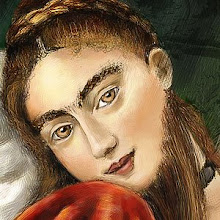
If Catherine shed any tears for her uncle, then she would have had few people to grieve with her. Florence mourned Clement's death by raiding and vandalizing his tomb. People did have reason to be angry. Clement had left behind a legacy of higher taxes and inflated grain prices. Most damaging for Catherine, he also left behind her unpaid dowry. Francis was now stuck with an unpopular, Italian daughter-in-law without a cent to her name, prompting him to make the remark, “the girl has come to me stark naked.”3 Three years after the marriage, Catherine was also failing at her sole purpose as wife to Henri II – she had yet to become pregnant. It was roughly during this time that Henri began his affair with the infamous Diane de Poitiers (shown here) more on her later...

A Damsel in Distress
So let’s recap. Catherine is stuck in France with no money, no blue blood, and no little Henri’s running around. Her husband has taken a mistress and her uncle has died. (But she does have great shoes.) How could Francis secure the Valois line if Catherine did not become pregnant? The logical solution would be for him to replace his daughter-in-law with a more fertile and politically advantageous bride. The Guise brothers began campaigning for Louise of Guise as the replacement wife. Years earlier in England, Henry VIII had kicked Queen Catherine of Aragon to the curb and swapped her for Anne Boleyn. What was to stop Francis from doing the same to Catherine?

Catherine knew her situation was doomed so she went to Francis begging him to at least let her serve the new queen as a lady-in-waiting. Luckily, Francis was a big softy for a damsel in distress. He said, “It is God’s will that you should be my daughter and the wife of the Dauphin. So be it.”4

Amen. So Catherine stayed put and set herself the task of becoming pregnant.


A Bitter Pill to Swallow
First, Catherine applied poultices of ground up stag antler and cow dung…a guaranteed remedy for infertility. When that didn’t work, she tried drinking large quantities of mule’s urine. (belch) Catherine even drilled holes in her chamber’s floor so that she could spy on her husband and his enigmatic mistress, Diane de Poitiers. Unfortunately, the peep show taught Catherine little in regards to fertility and much more than she needed to know about her husband’s passion for his mistress. After ten years of trying everything imaginable…time was running out.

The Fertility Doctors comes a Knockin’
Finally, the 16th century version of a fertility doctor, named Doctor Fernel was brought in and he diagnosed a slight irregularity in the couple’s reproductive organs. He prescribed a cure to which Henri and Catherine followed. I wish I could tell you more about this cure, but history doesn’t know what voodoo magic he used. All we know is that it worked fabulously. After 10 years of cow dung and sex education, Catherine gave birth to Francis II on January 19, 1544. Over the following years, she would give birth to 9 more children. Not too shabby for a mere "merchant's daughter."

Peace at last...Hardly
Although Catherine secured the succession, peace was still out of her reach. A royal cat fight was brewing between the two leading mistresses of the French court – Diane de Poitiers (mistress of the heir to the throne, Henri II) and the Duchess D’Etampes (mistress of King Francis I). Who will be the last strumpet standing??? I wouldn't put my gold coins on the aging king's mistress. All it takes is one kick of the bucket...and M. D'Etampes is out on her arse. Stay tuned for next post to see who comes out on top.

A full list of sources will be given at the end of Catherine de Medici's story

Notes:

(1) Pope Alexander VI was poisoned in 1503 after drinking poisoned wine which had been intended for the Cardinal de Corneto. The Venetian ambassador reported that it was the"the ugliest, most monstrous and horrible dead body that was ever seen, without any form or likeness of humanity” - de Rossa, p.151.
(2) The inscription on Clement's tomb read, 'To Clement the Seventh, Pontifex Maximus, whose invincible valour was only exceeded by his clemency.' The vandals changed the inscription to read, 'To Inclement, Pontifex Minimus whose conquered valour was only exceeded by his avarice.'
(3) p. 48. Frieda
(4) p. 58. Frieda


Thursday, November 20, 2008

Catherine de Medici: Part II - Hath No Fury than a Pope Scorned


In last week's post on Catherine de Medici, the citizens of Florence were debating what to do with the 13 year old Medici Duchess. The options were:

A. Strip her naked and exposed her on the city walls as target practice.
B. Place her in a brothel to spoil her marriage value.
C. Lock her up in a convent


Fortunately for Catherine, the citizens went with option C, but Catherine never knew if they would come storming into the convent to enact plan A or B. At one point, she even cut off all her hair and donned a nun’s habit daring the people to hurt a bride of Christ. Catherine intended to survive even if it meant a life of seclusion.

Yet, just a few months earlier the Florentine people had called her “Duchessina” (little duchess) and loved and respected her. We can imagine a 13 year old girl not fully understanding why her people had loved her one minute and then wanted her dead the next. Such a precipitous fall from grace cemented Catherine's distrusting nature. We will see this chariness color her political decisions later in life. (more on that later...)

Where was I? Ah yes, death and destruction…


Rome….A Bigger Mess

Months earlier, Catherine’s cousin Giulio de Medici, (Pope Clement VII) had some uninvited guests in the form of Spanish and German troops under Charles V. The main forces consisted of 13,000 German reiters and these brutes were not attacking Rome for religious redemption. They mostly just wanted booty. Instead of being paid, they worked out an agreement where they agreed to sack Rome if no limit was set to their pillaging. And pillage they did. They helped themselves to Rome’s goodies like hyperactive kids on a sugar high. It was said that their commander, von Frundsberg, wore around his neck a gold chain with the sole purpose of strangling the Pope. To amuse themselves further, they dressed an ass up in papal vestments and ordered a priest to feed it the consecrated Host. I don’t find it very funny, but the Germans found it hilarious. When the priest refused, they hacked him to pieces. hmmmm...still not funny.

All of these stories most likely reached Catherine.

But Frundsberg didn’t get to use his gold chain because Clement escaped disguised as a servant with a long beard and tattered hat. It wouldn’t have fooled me, but barbarians are not too smart when they are busy pilfering.

So with his papal robes dragging behind him, Clement hid out at the Castel St. Angelo while the holy city took a good beating. It was roughly during this time that English legates came to see the pope about Henry VIII’s divorce from Catherine of Aragon. They found Clement sitting on a straw pallet with his gouty leg propped up, vowing never to shave again. Clement was on hard times.

So let's recap. We have a very pissed off Pope, dressed like a pauper, sitting on a straw throne, needing a shave, his palace in Rome is in tatters, his people have been murdered and raped, and now the city where he came from was revolting and trying to drive out his Medici relatives. I am not defending the guy, but let’s just say he was probably in a bad mood. Clement felt betrayed by the Florentine revolt and intended to put it down swiftly and cruelly. Machiavelli didn’t dedicate The Prince to Clement’s brother, Lorenzo II, for nothing. Clement ‘s mission to put down the Florentine revolt reflected a Medici family mantra - “do evil if necessitated.”

In an act of marketing genius, Clement then made a secret agreement with Charles V to end the destruction in Rome in exchange for placing the crown of Charlegmagne on Charles' head (shown here on the right)1. This gave Charles serious religious prestige and cost Clement nothing. But how do you put a revolt down with no army? No worries. Clement employed the same barbarians that had sacked Rome just months earlier to put down the Florence revolt. The German historian Leopold Von Ranke, with his usual overly dramatic flair, described it best when he wrote, "With astonishment did men behold Clement launch upon his native city the very army by which the horrors of the Sack of Rome had been perpetrated before his eyes."2 (Cue the organ)

You have to be a little leery of a pope that finds employment for barbarians. Yet whether his tactics were justified, Clement was still triumphant. He then came to Florence to bring his prize back to Rome - his young cousin, Catherine de Medici.

The Pope’s Booty
Catherine was not of royal blood, but she did have a dowry big enough to tempt any prince so Clement went about looking for a suitable groom. Several suitors were proposed including:

A. The Duke of Richmond (Henry VIII’s illegitimate son)
B. King James V of Scotland
C. Prince of Orange
D. Duke of Milan


Any one might have made a fine husband, but Clement had higher aspirations for Catherine. Knowing that France could use some spare gold, Clement waved the carrot of Catherine’s dowry in front of King Francis I and Francis bit. Catherine was to be married to Francis’s second son, Henri II. Francis was not just hungry for Catherine’s dowry. She also fit into his grand scheme of taking a chunk of Italy here and there and the wily Clement VII did nothing to make Francis think border expansion was not possible.

Thus, the young Catherine de Medici traded up that donkey for a white palfrey and made her royal entrance into France wearing enough bling to blind a person.3 Cinderella stories prevail that she had a fairy god mother in the form of Leonardo da Vinci who designed the first high heel shoe for her star-studded premier. These tales certainly make for a good story if it were not for the fact that Leonardo died in 1519 and spent the last years of his life in France, not Italy. But Catherine did bring a sense of style to the court by employing the most talented Florentine seamstresses to make her dresses.

A very busy Woman
Besides high heels, Catherine made the following popular in France:

1.The first forms of ice cream - or sorbet4
2. The Fork - That one didn’t catch on until later
3. Handkerchiefs - but they were more like decorative squares and not the snot rags that we think of today
4. Dwarfs - Catherine had a thing for dwarfs
5. A train of Bears -Cause everyone needs a few Bears in your royal procession
6. Underware - the ladies of the court were going commando until Catherine came along
7. Seers and Soothsayers- Catherine was buddies with Nostradamus and the Ruggieri Brothers (more on them later...)
8. The side-saddle - Invented later in her reign to show off her legs
9. The folding fan
10. Tobacco – Made popular later in her reign. She ground it up to treat headaches, but unfortunately the rest of the court found other uses for it. (that means lung cancer for the kids at home!)

You would think a woman that shows up with fortune tellers, dwarfs and ice cream might impress a guy, but Henri seemed indifferent to his Father’s choice of bride. Perhaps he thought the “merchant’s daughter” was not high enough on the royal food chain for him. Perhaps her lack of beauty did not appeal to him. Perhaps he resented having no say in the matter. We will never know. But we do know that Henri was Francis’s least favorite son and relations between the two were never the stuff of hallmark commercials. Henri most likely blamed his Father for selling him short in the marriage market and probably saw his marriage alliance as proof of his Father’s lack of affection for him.5

Catherine already had a rough start.

King Francis I – Mentor or Sleazy Voyeur?
If Henri showed little affection for his new bride, at least Francis seemed happy with his choice. He liked Catherine so much that he even stayed in the newlywed’s chamber to make sure that he “saw valour in the joust.” We can only imagine how the 14-year old Catherine felt about her Father-in-law sticking around for her first moments as a newlywed. Yuck. It just might have killed the moment. Even worse, Pope Clement VII checked in on the two honeymooners the next morning to make sure that the deed was done. He left satisfied.

In truth, Francis probably would have made a better husband for Catherine than his son. They shared a love of dance, poetry, art, and beautiful people. Catherine knew how to please and Francis…liked to be pleased. Catherine quickly ingratiated herself into Francis harem, called the Petite Bande – a group of beautiful ladies that surrounded Francis everywhere he went. But Catherine was that girl who stood out amongst Francis’s bevy of dimwitted groupies. She was the girl with the “personality” who could keep up with the boys. She stayed side by side with Frances in the hunt and took her falls without a complaint. She knew all the latest dances. She knew all the hot artists (Vasari adored her)6 She made Francis laugh. Heck… she even knew how to use a fork. Catherine had that little something extra to make any man go hmmmm. It must have been refreshing for Francis to have a true Renaissance woman in his court when he had chosen so many of his companions by beauty alone. In turn, Francis became a mentor to Catherine and we can see many of her later political decisions influenced by these early years. (more on that later...)

So you can see Catherine had a chance of making a place for herself at court, winning the love of her people and being remembered by history as a true Renaissance queen. But we all know that is not how things turned out. No, her uncle, Pope Clement VII had to go and wreck everything. What did he do to wreck Catherine’s chance of happiness? Answer to come in Part III…

All sources will be listed at the end of Catherine's story.

Notes:

(1) This is a reproduction of the crown. The original crown was destroyed in 1590.

(2) Strage, p 16.


(3)Catherine wore a pair of priceless pearl earrings that she later gave to Mary Queen of Scots. These pearls ended up as part of Elizabeth I’s crown jewels after she ordered the execution of Mary Queen of Scots.

(4) The origins of the first forms of ice cream and many foods are spotty. I have included sorbet in the list because Francis fell in love with sorbet after Catherine's arrival in France. I have seen many tales circulating on the internet about Catherine introducing all sorts of recipes to France and changing how the French prepared food. Unfortunately, there isn't any proof that Catherine brought her cooks with her to France, and even if she did, it would not have changed how food was prepared. French and Italian cooking techniques were fundamentally the same. Also, In the 16th century, food was not distinguished by nationality so we would not have had "French Cuisine" or "Italian Cuisine"

(5) He almost married Mary Tudor. aka Bloody Mary - a real prize.

(6) Francis had a strong appreciation for the Renaissance Italian artists. In the art bargain of the century, Francis bought the Mona Lisa from Leonardo for 4000 gold coins.

Wednesday, November 12, 2008

Catherine de Medici - Part I : David Loses an Arm. Catherine loses a City

The Fall of Florence
In 1527, the city of Florence was one heck of a mess. The Florentines wanted the ruling family, the Medici, OUT and that included the Medici upstart, Pope Clement VII (Giulio de Medici) and all his clan. To punctuate their hatred, citizens tore threw the streets destroying the art that had once made Florence the Renaissance epicenter. Some genius even hurled a bench through a window and broke the David’s arm. 1

Catherine’s Fate
During the melee, the 13 year old Duchess of Florence, Catherine de Medici, rode through the streets of Florence on a donkey with the screams of an angry mob calling for her death. Catherine had few friends or family to protect her from her terrible fate. Her mother, Madelaine de la Tour d’Auvergne, a French Bourbon Princess, had died giving birth to her. Her father, Lorenzo II de Medici, the Duke of Urbino, had died from Syphilis weeks after Catherine's birth.2 Catherine represented everything the people had come to hate in the power-hungry banking family. Her bulging eyes and thick cheeks didn’t help any. Most contemporary sightings reported that Caterina Maria Romula di Lorenzo de' Medici looked every inch a Medici (and that was not a compliment). If the people could destroy the David, what was to stop them from killing this unattractive heiress to the Medici fortune?

There were certainly some creative suggestions as to what to do with her.

A. Strip her naked and exposed her on the city walls as target practice.
B. Place her in a brothel to spoil her marriage value.
C. Lock her up in a convent

What would be Catherine’s fate? Stay tuned for Part II for the answer…

Some Strange Art Coincidences
(1 ) We can thank the great painter and architect, Vasari for saving the arm. He hid David’s arm until things calmed down and then reattached it. Michelangelo was later convicted of taking part in the revolt when the Pope’s forces tore through Florence (more on that in Part II). Michelangelo did look pretty guilty since he was one of the masterminds behind the city’s fortification. But all ends well and we can thank the Prior of S. Lorenzo for saving Michelangelo's life. He hid the Michelangelo out until the Medici cooled their heels and forgave the wayward artist.

(2) Niccolo Machiavelli had honored Lorenzo (Catherine's Father) by dedicating The Prince to him. The Prince became one of Catherine's favorite light reads. Her critics later referred to it as "Catherine's Bible."

Sunday, November 2, 2008

How Royals Squashed a Rumor

A few weeks ago, I read an interesting article about the Science of Rumors concluding that the worst way to fight a rumor is to ignore it. It is an interesting study because it leads me to my next question: How much of a past ruler's image is affected by their ability to squash rumors?

Obviously the biggest invention to change how rumors were spread was the invention of the printing press around 1440. You may guess that religious material would be the hottest reads to roll off the presses, but that was not the case. Pamphlets and libels ridiculing the elite were the first best sellers. Instead of disseminating rumors through word of mouth, a deluge of printed material could now reach the masses. As a result, Kings and Queens were forced to make a painful decision….do they ignore the printed slander or punish the authors?

Queen of France, Catherine de Medici, best remembered for being responsible for the The St. Bartholomew's Day massacre, chose to ignore polemic pamphlets. Around 1575, after the death of her son Charles IX, an especially misogynistic pamphlet was printed entitled Discours Merveilleux de la vie, actions et deportements de Catherine de Medicis Royne. In it, Catherine was blamed for the St. Bart ‘s ruckus and ordering the murders that sparked the violence. (The basic gist of it was that she was the female devil incarnate sent to seduce the people of France.) This pamphlet was more than just tabloid trash. It was distributed widely and translated into German, English and Latin. It became so popular that it was even used to later discredit future female rulers, Marie de Medici and Marie Antoinette.


What did Catherine do when she read it? She laughed herself silly. She even had the audacity to further quip that the author left so much out and remarked that if he had gone to her directly… then she could have given him much more juicy tidbits. Yet, Catherine is not remembered for her sense of humor. Her name has unjustly become synonymous with bloodshed.

During the same time period, Elizabeth I of England would not tolerate any slanderous pamphlets attacking the crown. The zealous puritan, John Stubbs wrote a book entitled, The Discoverie of a Gaping Gulf whereinto England is like to be Swallowed by another French Marriage. You can pretty much figure out from the title how Stubb’s felt about Elizabeth’s possible marriage to Catherine de Medici’s son, The Duke of Anjou. The queen was not enlightened by Stubb's work and she promptly ordered the public removal of his right hand.1 Ouch! Today, this may seem like a draconian punishment for a little free speech, but Elizabeth (and certainly her advisers) understood the importance of royal image making. A weak monarch was a matter of appearances.

What do you think about the power of rumors? With the election just days away, how much of our voting decision is based on rumors?

(1) Elizabeth may have not found the book amusing, but Stubbs kept his sense of humor to the end. Before his hand was chopped off, he delivered one last bad pun and said, “Pray for me now my calamity is at hand.” Then after they chopped off his hand, he managed to retain his composure enough to get out a “God save the queen” before fainting.

Sources and Further Reading:
Pamphlet from
The Gordon Collection.
Strage, Mark. Women of Power: The Life and Times of Catherine de Medici. New York, NY: Harcourt Brace Jovanowich, 1976.
Lancelott, Francis. The Queens of England and Their Time, D. Appleton and Co., 1858.