






Showing posts with label Medicine. Show all posts
Showing posts with label Medicine. Show all posts
Monday, November 8, 2010
Over at the Three Pipe Problem
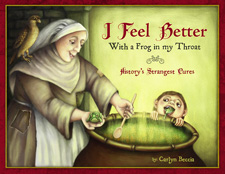
Catch me today over at the Three Pipe Problem reminiscing about the medieval cure I endured, discussing digital art and revealing hidden art secrets in I Feel Better with a Frog in my Throat.


Wednesday, October 20, 2010
Elizabeth I's Magical Unicorn

In the 16th century, Elizabeth I’s seamen were like little boys running in a vast field, trying to find the prettiest wild flowers to run back and give to their queen mum. Francis Drake, John Hawkins, Humphrey Gilbert, they were all in the race of their lives to find the best trade routes and the richest treasures to bring home to the woman who held the keys to Gloriana. But on July 22, 1577, English privateer, Martin Frobisher found the holy grail of treasures when he landed in Northern Canada while looking for the Northwest Passage through the Arctic Ocean. There, washed up on the icy shores, a long, spiral horn thrust through the earth and caught the sun’s rays like spun glass. This strange, white object was the remains of one of the most beautiful mythological creatures in Christendom and so rare that it could only be captured by a virgin.
Frobisher had not found just common beach debris. He had found the horn of a unicorn. To Read more, visit On the Tudor Trail>>
Tuesday, September 28, 2010
Illustration Friday: Old Fashion Medicine
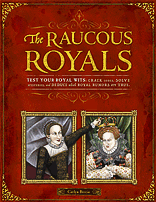
Raucous Readers will have to forgive me for the repetitive theme this month - my new book, I Feel Better with a Frog in my Throat is in stores now. I figure that since it takes me so long to actually complete a book that you won't mind my blatant self promotion every 5 bazillian years.
This week's Illustration Friday fits perfectly with a page from I Feel Better showing one of my favorite old fashion cures for sore throats - putting a dirty sock around your neck. Why did people believe this cure worked? That's in the book.

I have started to get some reviews in. Here are the ones I have so far:
From Kirkus:
Disgusting and futile medical practices are always a pleasure to contemplate. Beccia, following closely in the spirit of The Raucous Royals (2008)—dry-witted artwork, conversational text, engaging historical detective work—asks readers to guess which “cures” may actually have helped a handful of ailments. Take a nasty cough, for example: Should you take a heaping helping of caterpillar fungus, frog soup or cherry bark? Common good sense will lead readers to wag their heads no when it comes to sprinkling mummy powder on a wound or drilling a hole in your head to relieve a headache, though some counterintuitive measures will come as a surprise success: spider web for an open wound, frog slime for a sore throat, moldy bread to treat a cut. The author provides intriguing background information on the cures—where they arose, why they were thought to be efficacious—and pulls more than one gem out of the nastiness, such as the property of silver to kill bacteria, giving birth to a familiar expression: “In the Middle Ages, wealthy-born babies sucked on silver spoons to protect against plague....” (note, bibliography) (Informational picture book. 6-9)
From Booklist
Author-Illustrator Beccia has gathered some of history's strangest cures for what ails you. Some of these are silly (puppy kisses), some are sticky (spider webs), some are stinky (skunk oil,) and some are sweetly sentimental (a mother's kisses) Do any of them work. You bet, and part of the fun is guessing which ones (don't you dare turn to the page where the answers are revealed). Arranged by malady (coughs, colds, fevers, etc.) each section is typically introduced by three possible cures, with wounds getting nine choices. The pages that follow reveal which cures work, why, and when and where they might have originated. Beccia's droll text is greatly enhanced by her witty single - and double-page illustrations, filled with humorous details. Boys will especially enjoy the ickier cures (anyone for urine drinking?), while teachers and librarians will welcome the careful research and the useful appended bibliography.
-Michael Cart
This week's Illustration Friday fits perfectly with a page from I Feel Better showing one of my favorite old fashion cures for sore throats - putting a dirty sock around your neck. Why did people believe this cure worked? That's in the book.
I have started to get some reviews in. Here are the ones I have so far:
From Kirkus:
Disgusting and futile medical practices are always a pleasure to contemplate. Beccia, following closely in the spirit of The Raucous Royals (2008)—dry-witted artwork, conversational text, engaging historical detective work—asks readers to guess which “cures” may actually have helped a handful of ailments. Take a nasty cough, for example: Should you take a heaping helping of caterpillar fungus, frog soup or cherry bark? Common good sense will lead readers to wag their heads no when it comes to sprinkling mummy powder on a wound or drilling a hole in your head to relieve a headache, though some counterintuitive measures will come as a surprise success: spider web for an open wound, frog slime for a sore throat, moldy bread to treat a cut. The author provides intriguing background information on the cures—where they arose, why they were thought to be efficacious—and pulls more than one gem out of the nastiness, such as the property of silver to kill bacteria, giving birth to a familiar expression: “In the Middle Ages, wealthy-born babies sucked on silver spoons to protect against plague....” (note, bibliography) (Informational picture book. 6-9)
From Booklist
Author-Illustrator Beccia has gathered some of history's strangest cures for what ails you. Some of these are silly (puppy kisses), some are sticky (spider webs), some are stinky (skunk oil,) and some are sweetly sentimental (a mother's kisses) Do any of them work. You bet, and part of the fun is guessing which ones (don't you dare turn to the page where the answers are revealed). Arranged by malady (coughs, colds, fevers, etc.) each section is typically introduced by three possible cures, with wounds getting nine choices. The pages that follow reveal which cures work, why, and when and where they might have originated. Beccia's droll text is greatly enhanced by her witty single - and double-page illustrations, filled with humorous details. Boys will especially enjoy the ickier cures (anyone for urine drinking?), while teachers and librarians will welcome the careful research and the useful appended bibliography.
-Michael Cart
Wednesday, September 22, 2010
Quiz Time! Win a copy of I Feel Better with a Frog in my Throat

I have said it over and over again - Celebrities are the new royalty, but now here is some art to prove it.


3. Cameron Diaz

4. Alice Cooper

5. Anderson Cooper (that other Cooper)

6. Willie Nelson

7. Dakota Fanning (awwww)

8. Robert Pattinson

9. Natalie Portman

10. Jim Broadbent

11. And last, my favorite: Amy Whinehouse
The Rules:
To play, list the following in the comments section:
1. The title of the painting
2. The artist
3. Who it depicts (if we know)
Whoever gets the most answers correctly by Friday will win a shiny new copy of either I Feel Better with a Frog in my Throat or The Raucous Royals. Your choice.
I am going to have some more medicine related quizzes next week and I will post the latest book reviews. (deep breath) Thankfully, they are all good!
If you are planning to buy the book from Amazon, using the link below is always appreciated. I get a small kickback that goes to supporting the cost of maintaining this blog, newsletter, library late fees, history books and hot chocolate consumption.
You can find more of these amazing digitally manipulated paintings here.
Thursday, September 2, 2010
Showing some skin


The Wellcome Library folks are suspicious that the Crispus Attucks book is really made of skin, but Crispus is not the only human to be immortalized as a book. In 1821, John Horwood was executed for the murder of Eliza Balsum. In the 19th century, it was common for the remains of executed criminals to become fodder for anatomy classes. Horwood awaited such a fate with a gruesome twist - his skin became the cover of the ledger book that contained details of his execution. His doctor did a splendid job. If you look closely, you can see a skull and crossbones delicately embossed in each corner. Those Victorians could be so clever!
Remember my Touch
Some might think using skin as a book is a tad too nasty to contemplate, but others have felt that nothing says remember me like a book made from human remains. Such was the thinking of French novelist, Eugene Sue's mistress. She stipulated in her will that her skin should be bound around one of her lover's works. The book, Sue's Vignettes: les Mysteres de Paris sold at Foyle's in London for 29$. I guess that's the going rate for skin books.


Famed outlaw, Big Nose George Parrott fancied himself as "tough as old boots." His moniker seemed to hold true until he was captured and lynched by an angry mob of local citizens. George's death left a curious Doctor named Thomas Maghee to ponder: was George really as tough as old boots? Well, there was only one way to find out. He used George's skin to make himself some snazzy new shoes.
Let that be yet another Raucous History lesson - when you are coming up with a catchy slogan for yourself, you really must be careful that someone doesn't take you literally.
Sources and Further Reading:
Old Volumes
Murphy, Edwin. After the Funeral: The Posthumous Adventures of Famous Corpses, Barnes & Noble Books, 1998.
Carbon County Museum
The Wellcome Library
John Horwood and his macabre book legacy
Monday, August 16, 2010
A sneak preview of I Feel Better with a Frog in my Throat.... and the censorship begins!

My first reaction to this comment was the same feeling that I got when I hid Jennifer Nagel's chair on her in the first grade. I thought hiding Jennifer's chair would be funny. She was my friend and we were always playing pranks on each other. What I didn't forsee was Jennifer thinking her chair was where she left it and falling straight on her arse. I will never forget the look in Sister Agnes' eyes. I could count every line in the road map of her furrowed brow and they all pointed in one direction—utter disappointment.
That was my first reaction. I had done something horrible and just like Jennifer's sore bum; there was no way to fix it.
My second reaction (about 3 seconds later) was..."What the *$#@?" I Feel Better with a Frog in my Throat is a history book. The entire book shows people of the past trying out wacky cures and finding that some of the strange ones really did work. Why would any child viewing a book about the past think that minorities only existed in the past? Aren't kids smarter than that? Maurice Sendak certainly thought so. He sums up my reaction far more eloquently:
'People look for whether a picture book has followed the "rules" about what is right and healthy for children. This comes into conflict all the time with those things that are mysterious, because no serious artist’s work is ever just a single thing. What I object to is that picture books are judged from a particular, pedantic point of view vis-à-vis their relation to children- and I insist that any work of art is much more.
Besides, children don't need this approach to a book. They are much more catholic in taste; they'll tolerate ambiguities, peculiarities, and things illogical; they will take them into their unconscious and deal with them as best they can.
Most people are out to protect children from what they think is dangerous. Genuine artists have the same concern. Their work, however, may not confirm to what the specialists think is right or wrong for children. Artists are going to put elements into their work that come from their deepest selves. They draw on a peculiar vein from their own childhoods that is always open and alive. This is their particular gift. They understand that children know a lot more than people give them credit for. Children are willing to deal with many dubious subjects that grownups think they shouldn't know about.'
Above: The most powerful cure in history - kisses
The book includes history's strangest cures from maggots, mud, and mummy powder to leeches and purging and then explains why doctors believed they worked, but the last page contains a 'cure' that every child has used throughout history - kisses. I know it sounds corny, but I wanted to show that medicine has progressed because the power of hope pushed it forward.
This final spread is "my peculiar vein" and just so happens to be the page that this librarian most objected to. The last page is the only page in the book that illustrates a modern mother and child and that mother and child are white (gasp!) while the minorities depicted are set in the past. Her logic was that because only a white mother and child get a modern depiction that kids might think only whites are modern. Really, I might think this too if my head was trepanned with a blunt object (one of the many cures).
When I was working on this page, I pictured one image over and over again - a child holding my book in their hands with a sick parent, grandparent, sibling or pet and they can do absolutely nothing to make them feel better. Who has not wanted a little bit of hope in the face of hopelessness? Does hope need the right skin color to resonate with a child? I guess I will find out when the book is released, but I believe it does not.

Above: did caterpillar fungus cure?

Above: the philosopher stone holds the key to never getting sick.
Don't get me wrong. This is not an attack on librarians or this particular librarian. I love librarians. They are our brave gate-keepers with the impossible job of keeping our children safe in an unsafe world. I may write children's book for children, but I want to make librarians proud. But censoring children's books on the grounds of political correctness only serves to make a Faustian bargain with young readers. They may gain knowledge, but at what price? Is it worth losing the soul of a book?
Saturday, July 10, 2010
Horned Damsels

By the time Dimanche reached the ripe old age of 82, she decided that having a horn on her head wasn’t getting her any dates and had it removed by Dr. Souberbeille. Miraculously, she lived another seven years. How her dating life improved after the cosmetic surgery is left for history to ponder.
Today, A waxed cast of The Window Sunday’s famed horned face can be seen in the Mutter Museum. (shown here)
Sources and Further Reading:
Extracts from the Records, Boston Society for Medical Improvement, Boston, 1853-83.
Wednesday, April 7, 2010
Secret Fertility Potions of the Royals
The sun is out. Birds are chirping. Lawn mowers are cutting grass. My window is open and it finally feels like spring. We tend to think of spring as the time babies are born, but that is actually only true for sparrows. For humans, more babies are born in August than any other month presumably making the cold weather more conducive for conception. No worries. The Raucous Royals is here to offer the following fertility secrets passed down by the royals.
 The ancients just didn’t seem to get the whole concept of menopause. Such was the case of Byzantine Empress Zoe in the 11th century who at the age of fifty was forced to tie pebbles to her body, hang fertility amulets around her, and wear chains. By fifty, women have enough problems with things hanging without adding rocks to their body. Poor Zoe. She never did get that baby, but on the positive side, her body was compared to a "well baked chicken" with "every part of her was firm and in good condition." I kind of wish someone would say by giggly post-partum bits look like firm poultry.
 Throughout medieval and Renaissance times, when a queen was anointed with the consecrated oil, it was believed this oil guaranteed fertility. Some batches must have gone bad because greasing up didn’t always get the job done. When the first wife of Henry VIII, Catherine of Aragon could not conceive she made a pilgrimage to the shrine of Our Lady Walsingham and donned a hair shirt. She went through all that itchiness and she was still just left with one daughter, the future queen of England Mary Tudor.
 Catherine de Medici wins hands down for enduring the most uncomfortable fertility rituals. She applied a poultice of ground antlers and cow dung prescribed by her alchemists. When that didn’t work, she swallowed elixirs of mare’s milk, rabbit’s blood, and sheep’s urine. (gulp). And of course, she ceased all riding of mules because it was well-known that the animal caused sterility. I would be pissed if someone took away my mule!
 But don't think the women were having all the fun wallowing in cow dung. Men too had some freakishly weird fertility potions. Ferdinand of Aragon ate bull’s balls to increase his virility. Judging by the amount of mistresses he had, I hardly think he needed it.
 Other queens swore by “taking the waters”. Such was the case with Anne of Austria who realized her advancing age and infrequent visits from her husband, Louis XIII, were making her chances of conceiving slim to none. Miraculously, she conceived Louis XIV after taking the waters in Auvergne and he was born in 1638. Nicole Kidman reportedly swears by these same fertility waters.
 Wife of Charles II, Catherine of Braganza was another fan of fertility dips and spent her summers in the fecund waters of Tunbridge Wells and Bath. Unfortunately, she was not as successful giving birth to a healthy baby. I guess the Bath waters did not have the same magic.


 The ancients just didn’t seem to get the whole concept of menopause. Such was the case of Byzantine Empress Zoe in the 11th century who at the age of fifty was forced to tie pebbles to her body, hang fertility amulets around her, and wear chains. By fifty, women have enough problems with things hanging without adding rocks to their body. Poor Zoe. She never did get that baby, but on the positive side, her body was compared to a "well baked chicken" with "every part of her was firm and in good condition." I kind of wish someone would say by giggly post-partum bits look like firm poultry.
 Throughout medieval and Renaissance times, when a queen was anointed with the consecrated oil, it was believed this oil guaranteed fertility. Some batches must have gone bad because greasing up didn’t always get the job done. When the first wife of Henry VIII, Catherine of Aragon could not conceive she made a pilgrimage to the shrine of Our Lady Walsingham and donned a hair shirt. She went through all that itchiness and she was still just left with one daughter, the future queen of England Mary Tudor.
 Catherine de Medici wins hands down for enduring the most uncomfortable fertility rituals. She applied a poultice of ground antlers and cow dung prescribed by her alchemists. When that didn’t work, she swallowed elixirs of mare’s milk, rabbit’s blood, and sheep’s urine. (gulp). And of course, she ceased all riding of mules because it was well-known that the animal caused sterility. I would be pissed if someone took away my mule!
 But don't think the women were having all the fun wallowing in cow dung. Men too had some freakishly weird fertility potions. Ferdinand of Aragon ate bull’s balls to increase his virility. Judging by the amount of mistresses he had, I hardly think he needed it.
  Other queens swore by “taking the waters”. Such was the case with Anne of Austria who realized her advancing age and infrequent visits from her husband, Louis XIII, were making her chances of conceiving slim to none. Miraculously, she conceived Louis XIV after taking the waters in Auvergne and he was born in 1638. Nicole Kidman reportedly swears by these same fertility waters.
  Wife of Charles II, Catherine of Braganza was another fan of fertility dips and spent her summers in the fecund waters of Tunbridge Wells and Bath. Unfortunately, she was not as successful giving birth to a healthy baby. I guess the Bath waters did not have the same magic.
During Louis XIV's reign, it’s no wonder how anyone ever got pregnant because women could not have sex one hundred days of the year during Catholic observance days. Soon fertility went hand in hand with some of the wackiest superstitions in history. For example, to get a son, women were instructed to conceive during the waxing moon and to constrict the man’s left testicle. (girls came from the left testicle, boys came from the right). Men were also instructed to work a bit harder because it was believed that a woman’s orgasm increased fertility. (Yey! This one is actually true.) The church advised women to pray to St. Leonard, a hermit who founded a monastery and was the patron saint of prisoners. (Ironic, considering pregnancy often feels like an imprisonment). I do believe in the power of prayer and praying to any saint seems like a far better option then waiting for a waxing moon. I would just pick another saint. Those handcuffs he is holding are kind of scary.

When royals failed to conceive, they also could rely on the old Renaissance card trick - the phantom baby. When Henry VIII’s sister, Mary married the ailing, decrepit King of France, Louis XII, there was little hope for an heir. But without a heir, Mary also had little chance of staying in France and the clock was ticking with her gouty husband. No problem for this Tudor vixen. After Louis’ death, Mary simply wrapped her thin waste in towels and staged an occasional fainting spell. Unfortunately, no one bought the ruse especially the mother of Francis I, Louise of Savoy, who knew her son had a pretty good chance of becoming the next king if there were no visits from Mr. Stork. Louise ordered a full medical examination that turned up with Mary looking much thinner minus her pseudo baby bump. Shortly after her husband’s death, Mary was sent packing.

The beautiful Bianca Capello took the pregnancy ruse one step further. Around 1564, Bianca caught the eye of the son of the Grand Duke of Florence, Francesco de Medici. Unfortunately, Bianca was already married to a young clerk named Pietro Bonaventuri and Francesco was married to Johanna of Austria. In the Medici household, pesky husbands had a habit of turning up dead and wives were practically invisible. Such was the fate of Pietro when he was found murdered in the streets of Florence after a “scuffle”.
Bianca and Francesco carried on until 1574 when Francesco became Grand Duke of Tuscany. Throughout Francesco’s marriage, Johanna had only born him six measly daughters (a son died in youth). Now all Bianca needed to get the misses out of the way was a bouncing baby Medici. She took to wearing layered clothing and told Francesco the happy news. After a secluded "birth", she swiped a baby from a working class mother and passed it off as Francesco's new heir to the Medici fortune. The baby was named Antonio, Johanna died a few years later, and Bianca had her fairy tale ending.
Not exactly. Even though Bianca had conveniently disposed of her accomplices, Francesco found out. No worries still. Illegitimate sons could become heirs in Florence….if they could survive the machinations of the family members they were replacing. Antonio did survive. Mom and Pops were not so lucky. Bianca and Francesco mysteriously turned up dead after vacationing in their villa. Their symptoms coincide with arsenic poisoning probably ordered by Francesco’s brother Ferdinando...but that is a post for another day.
Tuesday, March 16, 2010
The Quack Doctor has a new newsletter

We could chortle at our silly grandparents for digesting green goo to cure "corset pain" but I am not entirely convinced our modern medicine is always safe. I was recently really disturbed to know that the Omega- 3 Fatty Acids I have been shoveling in my mouth (while pregnant and nursing) contain dangerous levels of PCB. Nothing like feeding your unborn child the same chemical used in flame retardents and paint. yum.
Wednesday, February 17, 2010
Quiz time: Can you guess the most deadly invader in London’s history?
The proud city of London has been brought to its knees by many invaders, but one particular assailant packed the Muhammed Ali of punches to local residents. This mystery invader could rip flesh from bones with its bare teeth at a force of 7000 pounds per square inch. They could scale the tallest fortification and fall fifty feet without any harm. They felt no remorse invading the homes of helpless women and children and they laughed in the face of danger (1) This invader may sound fictitious, but it was very real. And much like Muhammed Ali’s famous "rope-a-dope" strategy, just when Londoners thought they had it beaten…. it came back year after year and multiplied in strength and numbers.
What was this insidious raider upon the peaceful streets of London?
Scroll down for answer?
Keep scrolling
Work it
Work it
You just burned 3.5 calories,
Ok I made that up but the rest is 100% factual.

Answer: RATS. Or more precisely, Rattus rattus otherwise known as the black rat.
In the 14th century, rats were as ubiquitous as Central Park pigeons. You could hardly turn a street corner without a rat’s beady eyes staring you down. London had become such a cesspool of rodents that an English-French Dictionary warned travelers that they would enjoy their stay in London as long as they didn’t mind the “great pack of rats and mice.”
Most people would blame London's rat problem on the streets being so dirty, but rats are actually pretty clean rodents. They are very similar to cats and will incessantly lick their fur. In fact, rats clean themselves far more than the average 14th century person ever did. (if you consider rat spittle clean.)
The true problem was food, not filth. London's sanitation methods gave the rat had an all-night buffet of every food choice imaginable. Slaughter houses killed animals on the streets and left their decaying bodies to rot amongst the stench. Barber surgeons bled their patients and then dumped the blood into the narrow street. Wild pigs and dogs roamed freely and fell dead in ditches. “Rakers”, the trash collectors of their day, were employed to cart the rubbish away, but they tended to fall into the drunk and lazy category and often simply deposited waste in neighboring wards or hoped the rain would wash it into the Thames (rats btw, are excellent swimmers and have even been known to survive the good old toilet flush). Fines were instituted and often ignored. London’s population had become so large that it was simply too difficult to keep the rat's food supply down.
These were good times to be a rat.
Londoners vs. the Rats
 Londoners fought back with futile measures using poisons such as hellebore root. Unfortunately, rats are extremely smart creatures and will actually learn over time what is poisonous and then warn their rat buddies not to eat the poison by urinating on it. (rats don't eat feces or urine...even they have standards.) Other rat removal methods only aggravated the problem, such as a popular 17th century remedy that advised housewives to, "Fry a sponge in butter and hang it by a string, and the rats will forsake the room."(2) I don't know about you, but I have never seen a rat forsake butter.
When poisons and butter didn’t work, Londoners employed “rat catchers” (shown above right) to round up rats Holocaust style. But rats are also amazing breeders. Left to their own vices, two black rats breeding for three years can produce 329 million offspring. That’s a lot of baby rats biting the toes of London’s children. But sadly, the rat’s true handmaiden of death was not in its bite, but on its back.
 A bad day for ratsWhat could possibly be worse than a fat, healthy rat crossing your path in 14th century London? A sick plague infested rat crossing your path in 14th century London. For hidden in its fur, Mr. Rat carried one of the deadliest forms of germ warfare known to man—Bubonic Plague. The Victorians christened it “The Black Death” and for good reason. This disease was truly dark. It killed four out of five people it infected and usually in less than four days. Symptoms began with fever, chills and headaches. That was the fun part. On the last days of the disease, puss filled sores called buboes erupted like walnut sized zits. In the 14th century, the plague annihilated at least 1/3 of London’s population (about 200 people per day) and some historians estimate closer to 1/2 of the population in other areas. The death toll became so great that church bells stopped ringing to honor the dead. Husbands abandoned wives. Wives abandoned husbands. Children were orphaned over night. And then there was the little problem with how to bury so many corpses. Grave diggers got lazy and stacked bodies on top of each other in shallow graves only for the dogs to dig up the corpses the next day. Imagine seeing grandma's body dragged through the silent streets by a hungry dog. And do you think the rats cared? Well, plague was not any picnic for them either.
Some rat sympathy
In the 19th century, Robert Koch described plague as, “a disease of rats in which men participate”. (3) Koch was correct. Plague killed rats too, but there was more to the story. Plague’s true villain was a deadly bacterium inside the rat's bloodstream called Y. Pestis who chose rats as its primary disease vector. It was a smart decision, not only because rats were so abundant, but because the rat had a lethal conspirator—X. cheopis (rat fleas).(4)
The dangers of flea vomit
Here is how plague worked: the rat fleas fed on the rat’s blood and became infected with Y. Pestis. This infection resulted in a blockage of undigested blood in the flea’s foregut causing the flea to vomit the plague bacilli into its victim with each bite. As a bonus side effect, nutrients were prevented from ever reaching the flea and without any nutrients…14th century Londoners had some very hungry rat fleas on their hands. Have you have ever met a hungry rat flea? Let’s hope you never do. When starving, they are not particularly picky eaters. After their rat host dies, cats, dogs, bunnies, and cute little medieval boys and girls taste just as yummy.

The Raucous Royals against the Rats
People throughout the 14th -19th century were unaware of Y. Pestis, but they did understand the connection between debris, disease and rats. Several royals fought back against rat invaders. Edward III issued edicts demanding that Londoners clean up their act. (The king was later to lose his favorite daughter, Princess Joan to the Black Death.) Henry VIII fought back with vinegar, demanding that the palace walls be scrubbed daily to remove bugs and vermin. Queen Christina of Sweden took a more direct approach and fired four-inch canons equipped with tiny iron balls at rats. Elizabeth I employed her dog rat catchers to remove these pests and Queen Victoria hired not only dogs, but some of the most famous rat catchers in London’s history. Most kings and queens avoided rats by continually moving from palace to palace. If plague broke out, then they simply followed the advice of 14th century plague doctor Guy de Chaulliac of 'go quickly, go far, and return slowly.'(5)
 Sure….Blame it on the cows instead
Debate still continues on the true cause of the Black Death, but it is still generally believed that infected rat fleas jumped from rats to humans and then….BAM you were trapped in a Grien painting. (ouch....my hair!) However, several questions have caused debate about the rat's role in the 14th century plague.
First, there were no reports of medieval rats dieing. Rat fleas typically bite humans when the rat population is decreased so dead rats piling up was a clear sign that rat fleas would be looking for their next meal. Some have speculated that the death of rats went unnoticed because dead rats were such a frequent occurrence in London.
Second, the Black Death never subsided in winter months when rat fleas obviously would not be as active. In fact, some of the highest death rates were in December and January.
Third, the disease spread so quickly and rats are not exactly the adventurous type. As long as they have food, they tend to stay in the same 100 feet radius their whole lives (approximately nine months). Some scientists have speculated that the human flea would have done a far better job spreading plague than the rat flea because humans traveled greater distances and would have had more opportunity to spread plague from person to person. Others claim that the human flea contains too few bacilli to spread the disease efficiently.
These questions have led to some rat defending conspiracy theorists. The rat defenders have speculated that the plague was really a deadly form of cattle Anthrax or the Ebola virus. To complicate matters further, plague could be transmitted person to person through the air, called pneumonic plague and this more virulent form of the plague did not require any rats. So once the plague got going, the rats were not entirely to blame.
 All ends well for plague infested London
Some historians like to put a positive spin on catastrophes. I am not one of those people, but everyone wants a happy ending, so here goes:
There was a benefit that the black rat left in its wake. Plague deaths caused Europe to have a labor shortage and the surviving peasants could now demand higher wages for menial labor. This eventually led to the collapse of serfdom and freed up capital. In other words, with everyone dead and buried, the people left standing got a pay raise. Some even argue that the Renaissance wouldn't have happened without all this fire and brimstone urging progress and democracy forward. From a biological standpoint, those who survived may have also developed immunity to the plague and this immunity is identical to HIV immunity. So if you have an ancestor that survived the plague, you could be immune to HIV. Now, go thank a rat.
In his recent book, Ian Mortimer reminds us that if you had an ancestor that didn't survive the plague than you might not appreciate someone talking about the benefits of their death. I liken it to a historian 100 years from now writing that 9/11 was a good thing because the rubble got recycled into more efficient buildings. Further putting the Black Death into perspective Mortimer writes:
"The deaths in 1348-49 are so numerous that the statistics are much easier to talk about than the individual tragedies...If anything, it proves the value of virtual history—of understanding historical events as lived experiences, as opposed to impersonal facts." (6)
 Rats Today: Just as lovable
Today the black rat is far less common than its much larger cousin, the brown rat. (The brown rat is the city rat you see today scampering around the corner after you have just finished a big, expensive dinner in a fancy restaurant.) Rats still cause all sorts of raucous, mostly from their gluttonous diets. They eat crops destroying valuable grain. They eat through clothing. They have killed off over 19 species of birds in their quests for eggs. (Rats really like eggs.) Heck, they will even eat right through a lead pipe. But probably the most annoying thing they eat is history. Most of British History's most important documents are illegible because they are half-eaten by rats.
 Some think rats are sort of cute and keep them as pets. Today we have "fancy" rats and whole organizations dedicated to loving rats. Rat pet owners say their rats are very similar to dogs - easily trained, curious, lovable and extremely sociable. (If you get a pet rat than you have to get him a girlfriend/boyfriend. Rats hate to be alone.) Rats are sort of cute...from a very safe distance.
Plague Today: Just as lethal
The plague continued to wreak havoc throughout the 14th century and made a spectacular appearance in the The Great Plague of 1665 and again in 1890, but none of these plagues matched the destruction of the Black Death. Y. Pestis is still a very real problem today. About 3000 cases of Bubonic Plague are reported worldwide. In America, the disease can be spread by rats, skunks, prairie dogs, squirrels, chipmunks and even cats. Fortunately, the plague can now be cured by antibiotics, if it is caught it time. Currently, there is no vaccine for the plague.
 Stay tuned for a future post on the wackiest plague cures in history to coincide with the release of my next book: I Feel Better with a Frog in my Throat, History's Strangest Cures (October 2010).
Notes:(1) Yes, rats really do laugh. If you tickle their tummy they will make a sort of chirping sound. If you don’t believe me then this scientist who studies rat laughter will.
(2) From Hannah Woolley, A supplement to the queen-like closet. London, 1674.(3)Kelly. P 42
(4) Besides X. cheopis, Y. Pestis can be transmitted by over 31 different flea species, possibly including P. irritans (the human flea).
(5) Mortimer. p 203
(6) Mortimer. p 203
Sources and Further Reading:Black rat image from the Wellcome Library
Bubonic Plague
Marrin, Albert. Oh Rats! The story of rats and people, New York: NY, Dutton, 2006.
Kelly, John. The Great Mortality. An Intimate History of the Black Death, The Most Devastating Plague of all time. New York: NY, Harper Perennial, 2005.
Mortimer, Ian. The Time Traveler's Guide to Medieval England. A Handbook for Visitors to the Fourteenth Century, New York: NY, Touchstone Books, 2008.
What was this insidious raider upon the peaceful streets of London?
Scroll down for answer?
Keep scrolling
Work it
Work it
You just burned 3.5 calories,
Ok I made that up but the rest is 100% factual.

Answer: RATS. Or more precisely, Rattus rattus otherwise known as the black rat.
In the 14th century, rats were as ubiquitous as Central Park pigeons. You could hardly turn a street corner without a rat’s beady eyes staring you down. London had become such a cesspool of rodents that an English-French Dictionary warned travelers that they would enjoy their stay in London as long as they didn’t mind the “great pack of rats and mice.”
Most people would blame London's rat problem on the streets being so dirty, but rats are actually pretty clean rodents. They are very similar to cats and will incessantly lick their fur. In fact, rats clean themselves far more than the average 14th century person ever did. (if you consider rat spittle clean.)
The true problem was food, not filth. London's sanitation methods gave the rat had an all-night buffet of every food choice imaginable. Slaughter houses killed animals on the streets and left their decaying bodies to rot amongst the stench. Barber surgeons bled their patients and then dumped the blood into the narrow street. Wild pigs and dogs roamed freely and fell dead in ditches. “Rakers”, the trash collectors of their day, were employed to cart the rubbish away, but they tended to fall into the drunk and lazy category and often simply deposited waste in neighboring wards or hoped the rain would wash it into the Thames (rats btw, are excellent swimmers and have even been known to survive the good old toilet flush). Fines were instituted and often ignored. London’s population had become so large that it was simply too difficult to keep the rat's food supply down.
These were good times to be a rat.
Londoners vs. the Rats
 Londoners fought back with futile measures using poisons such as hellebore root. Unfortunately, rats are extremely smart creatures and will actually learn over time what is poisonous and then warn their rat buddies not to eat the poison by urinating on it. (rats don't eat feces or urine...even they have standards.) Other rat removal methods only aggravated the problem, such as a popular 17th century remedy that advised housewives to, "Fry a sponge in butter and hang it by a string, and the rats will forsake the room."(2) I don't know about you, but I have never seen a rat forsake butter.
When poisons and butter didn’t work, Londoners employed “rat catchers” (shown above right) to round up rats Holocaust style. But rats are also amazing breeders. Left to their own vices, two black rats breeding for three years can produce 329 million offspring. That’s a lot of baby rats biting the toes of London’s children. But sadly, the rat’s true handmaiden of death was not in its bite, but on its back.
 A bad day for ratsWhat could possibly be worse than a fat, healthy rat crossing your path in 14th century London? A sick plague infested rat crossing your path in 14th century London. For hidden in its fur, Mr. Rat carried one of the deadliest forms of germ warfare known to man—Bubonic Plague. The Victorians christened it “The Black Death” and for good reason. This disease was truly dark. It killed four out of five people it infected and usually in less than four days. Symptoms began with fever, chills and headaches. That was the fun part. On the last days of the disease, puss filled sores called buboes erupted like walnut sized zits. In the 14th century, the plague annihilated at least 1/3 of London’s population (about 200 people per day) and some historians estimate closer to 1/2 of the population in other areas. The death toll became so great that church bells stopped ringing to honor the dead. Husbands abandoned wives. Wives abandoned husbands. Children were orphaned over night. And then there was the little problem with how to bury so many corpses. Grave diggers got lazy and stacked bodies on top of each other in shallow graves only for the dogs to dig up the corpses the next day. Imagine seeing grandma's body dragged through the silent streets by a hungry dog. And do you think the rats cared? Well, plague was not any picnic for them either.
Some rat sympathy
In the 19th century, Robert Koch described plague as, “a disease of rats in which men participate”. (3) Koch was correct. Plague killed rats too, but there was more to the story. Plague’s true villain was a deadly bacterium inside the rat's bloodstream called Y. Pestis who chose rats as its primary disease vector. It was a smart decision, not only because rats were so abundant, but because the rat had a lethal conspirator—X. cheopis (rat fleas).(4)
The dangers of flea vomit

Here is how plague worked: the rat fleas fed on the rat’s blood and became infected with Y. Pestis. This infection resulted in a blockage of undigested blood in the flea’s foregut causing the flea to vomit the plague bacilli into its victim with each bite. As a bonus side effect, nutrients were prevented from ever reaching the flea and without any nutrients…14th century Londoners had some very hungry rat fleas on their hands. Have you have ever met a hungry rat flea? Let’s hope you never do. When starving, they are not particularly picky eaters. After their rat host dies, cats, dogs, bunnies, and cute little medieval boys and girls taste just as yummy.

The Raucous Royals against the Rats
People throughout the 14th -19th century were unaware of Y. Pestis, but they did understand the connection between debris, disease and rats. Several royals fought back against rat invaders. Edward III issued edicts demanding that Londoners clean up their act. (The king was later to lose his favorite daughter, Princess Joan to the Black Death.) Henry VIII fought back with vinegar, demanding that the palace walls be scrubbed daily to remove bugs and vermin. Queen Christina of Sweden took a more direct approach and fired four-inch canons equipped with tiny iron balls at rats. Elizabeth I employed her dog rat catchers to remove these pests and Queen Victoria hired not only dogs, but some of the most famous rat catchers in London’s history. Most kings and queens avoided rats by continually moving from palace to palace. If plague broke out, then they simply followed the advice of 14th century plague doctor Guy de Chaulliac of 'go quickly, go far, and return slowly.'(5)
 Sure….Blame it on the cows instead
Debate still continues on the true cause of the Black Death, but it is still generally believed that infected rat fleas jumped from rats to humans and then….BAM you were trapped in a Grien painting. (ouch....my hair!) However, several questions have caused debate about the rat's role in the 14th century plague.
First, there were no reports of medieval rats dieing. Rat fleas typically bite humans when the rat population is decreased so dead rats piling up was a clear sign that rat fleas would be looking for their next meal. Some have speculated that the death of rats went unnoticed because dead rats were such a frequent occurrence in London.
Second, the Black Death never subsided in winter months when rat fleas obviously would not be as active. In fact, some of the highest death rates were in December and January.
Third, the disease spread so quickly and rats are not exactly the adventurous type. As long as they have food, they tend to stay in the same 100 feet radius their whole lives (approximately nine months). Some scientists have speculated that the human flea would have done a far better job spreading plague than the rat flea because humans traveled greater distances and would have had more opportunity to spread plague from person to person. Others claim that the human flea contains too few bacilli to spread the disease efficiently.
These questions have led to some rat defending conspiracy theorists. The rat defenders have speculated that the plague was really a deadly form of cattle Anthrax or the Ebola virus. To complicate matters further, plague could be transmitted person to person through the air, called pneumonic plague and this more virulent form of the plague did not require any rats. So once the plague got going, the rats were not entirely to blame.
 All ends well for plague infested London
Some historians like to put a positive spin on catastrophes. I am not one of those people, but everyone wants a happy ending, so here goes:
There was a benefit that the black rat left in its wake. Plague deaths caused Europe to have a labor shortage and the surviving peasants could now demand higher wages for menial labor. This eventually led to the collapse of serfdom and freed up capital. In other words, with everyone dead and buried, the people left standing got a pay raise. Some even argue that the Renaissance wouldn't have happened without all this fire and brimstone urging progress and democracy forward. From a biological standpoint, those who survived may have also developed immunity to the plague and this immunity is identical to HIV immunity. So if you have an ancestor that survived the plague, you could be immune to HIV. Now, go thank a rat.
In his recent book, Ian Mortimer reminds us that if you had an ancestor that didn't survive the plague than you might not appreciate someone talking about the benefits of their death. I liken it to a historian 100 years from now writing that 9/11 was a good thing because the rubble got recycled into more efficient buildings. Further putting the Black Death into perspective Mortimer writes:
"The deaths in 1348-49 are so numerous that the statistics are much easier to talk about than the individual tragedies...If anything, it proves the value of virtual history—of understanding historical events as lived experiences, as opposed to impersonal facts." (6)
 Rats Today: Just as lovable
Today the black rat is far less common than its much larger cousin, the brown rat. (The brown rat is the city rat you see today scampering around the corner after you have just finished a big, expensive dinner in a fancy restaurant.) Rats still cause all sorts of raucous, mostly from their gluttonous diets. They eat crops destroying valuable grain. They eat through clothing. They have killed off over 19 species of birds in their quests for eggs. (Rats really like eggs.) Heck, they will even eat right through a lead pipe. But probably the most annoying thing they eat is history. Most of British History's most important documents are illegible because they are half-eaten by rats.
 Some think rats are sort of cute and keep them as pets. Today we have "fancy" rats and whole organizations dedicated to loving rats. Rat pet owners say their rats are very similar to dogs - easily trained, curious, lovable and extremely sociable. (If you get a pet rat than you have to get him a girlfriend/boyfriend. Rats hate to be alone.) Rats are sort of cute...from a very safe distance.
Plague Today: Just as lethal
The plague continued to wreak havoc throughout the 14th century and made a spectacular appearance in the The Great Plague of 1665 and again in 1890, but none of these plagues matched the destruction of the Black Death. Y. Pestis is still a very real problem today. About 3000 cases of Bubonic Plague are reported worldwide. In America, the disease can be spread by rats, skunks, prairie dogs, squirrels, chipmunks and even cats. Fortunately, the plague can now be cured by antibiotics, if it is caught it time. Currently, there is no vaccine for the plague.
 Stay tuned for a future post on the wackiest plague cures in history to coincide with the release of my next book: I Feel Better with a Frog in my Throat, History's Strangest Cures (October 2010).
 Notes:(1) Yes, rats really do laugh. If you tickle their tummy they will make a sort of chirping sound. If you don’t believe me then this scientist who studies rat laughter will.
(2) From Hannah Woolley, A supplement to the queen-like closet. London, 1674.(3)Kelly. P 42
(4) Besides X. cheopis, Y. Pestis can be transmitted by over 31 different flea species, possibly including P. irritans (the human flea).
(5) Mortimer. p 203
(6) Mortimer. p 203
Sources and Further Reading:Black rat image from the Wellcome Library
Bubonic Plague
Marrin, Albert. Oh Rats! The story of rats and people, New York: NY, Dutton, 2006.
Kelly, John. The Great Mortality. An Intimate History of the Black Death, The Most Devastating Plague of all time. New York: NY, Harper Perennial, 2005.
Mortimer, Ian. The Time Traveler's Guide to Medieval England. A Handbook for Visitors to the Fourteenth Century, New York: NY, Touchstone Books, 2008.
Thursday, December 24, 2009
Tis the Season for Gout: The Disease of Kings

It is said (usually by men) to be more painful than childbirth. The pain comes on so suddenly that one minute you could be blissfully gnawing on that Christmas turkey leg, and the next minute....your big toe is swollen to the size of a coconut. Henry VIII, Charles V, and George IV suffered from it. My daughter suffers from it. Every time I put her in her crib she screams,"GeeOUT!" (Poor kid. I would want to get out of my crib too if I had gout.)
Called the “disease of kings,” gout is a form of arthritis characterized by inflammation in a joint. But doctors today are seeing more and more cases of gout, especially during the holiday season.
Christmas dinner for the gout patient
What to serve that gouty relative this Christmas? First off, hide the brandy, stuffed pigeon and goose eggs. Gout is caused by an overproduction of uric acid by the body usually brought on my eating an artery clogging diet of rich meats and alcohol. Instead, offer your guest some coffee, bananas, blueberries or celery – all foods shown to prevent gout.
Happy Holidays. Enjoy your gout-free feast!
Wednesday, December 16, 2009
The Top 10 Tips for Surviving Christmas - 17th century-style

I am behind on my research for some posts because I am still recovering from a nasty bout of the Norwalk Virus...otherwise known as the stomach flu...otherwise known at the sickness that will make you never eat again.
In the meantime, here is an interesting article from the Wellcome library on The Top 10 Tips for Surviving Christmas -17th century style (although I could have done without the recipe for a good purge)
Tuesday, October 6, 2009
Those gossiping son of a guns
 Are you sick of all the child birth posts yet? Ok, I promise this is my last one…maybe. When researching this subject, I was surprised to find many American idioms and words that originated in child birth practices. Here are a few of my favorite:
Son of a Gun
If you were a sailor’s wife in the 17th century then you might not want to give birth on the ship. To help the baby along the sailors would fire a canon believing the blast would help the baby come out faster. It’s from this tradition that we get the phrase “son of a gun.” Just imagine coming into the world to the sound of blazing canons.
 Gossip
Throughout history, when a woman gave birth it turned into one big party where presumably everyone but the mother in labor had a good time. When Marie Antoinette gave birth to her daughter, everyone but the local butcher crowded into her bed chamber to wait for the blessed event. These women who gathered around the birthing mother chattering and sharing stories were called “God-sibs” or sisters-in-god and became the origin of the word gossip. When Louis XIV’s mistress, Louise de la Valliere gave birth, he appointed a male midwife because he new prattling women were less likely to be discreet.
 Farmed out
Today when you use the term “farmed out,"you usually think of the labor forces used in other countries to manufacture the goods that were once made in America. The term actually has its origins in childbirth. Throughout the 17th and 18th century, wealthy English ladies would send their newborns out to live with a wet nurse in the country. This practice was called “farmed out.”
Travel
Before the 1300s, the word travel was derived from “travail” and was defined as painful exertion and suffering. It was often used in referring to the pain of childbirth. They just don’t call it labor for nothing!
Friday, September 25, 2009
The History of Cesarean Sections

Its Origins
Contrary to the popular myth, there is no proof that Julius Caesar was born through c-section or that the operation was named after him. My guess is that the myth became so widespread because many ancient gods were believed to be cut from the wombs of their mothers. Julius Caesar would have certainly preferred a godlike birth, but it is highly unlikely given the fact that his mom survived his delivery. Some historians believe that the c-section’s origins can be traced back to a royal decree issued by Numa Pompilius in 700 BC called Lex Caesare. Lex Caesar stated that if a mother was dead or dying that the baby should be cut from her womb. Another theory states that the origin of the word is derived from the Latin verb caedere which means “to cut.”
Surviving a C-section

Today, c-sections rarely lead to the death of the mother, but before the 1900s, the odds of a woman surviving an infection and the hemorrhaging were slim to none. Often, a cesarean came down to a painful decision of who should live – the mother or the child. The Catholic church favored the child reasoning that a baby needed to be baptized. Even as late as 1930, Pope Pius XI decreed that doctors could not take a baby’s life to save the mother. We can imagine what a painful decision it would have been for a Catholic father forced to choose his unborn child over his wife.
The cesareans of the past also would not have involved the small “bikini cut” that we see today. Surgeons of the past carved a woman up like the Christmas turkey often making vertical cuts that extended as high as the ribs and resulted in the intestines spilling out. Some doctors cut diagonally. Others surgeons just made multiple cuts until they were able to pull the baby out by its feet.
Post-op procedures were not for the faint of heart either. During the Renaissance, a woman inserted a linen pessary of rose oil and egg yolk into her vagina three times a day. Rose oil does have healing properties, but it wouldn’t have done much to fight an infection. Another common procedure was to attach leeches to where a woman was cut or if she had given birth naturally to her perineum. And the popular panacea of bloodletting was also commonly used to reduce fever. (a subject for another day).
 The other option
All of this may sound pretty horrific until you consider what was done in place of cesareans. When a baby was in breech and could not be delivered, doctors would perform an embryotomy in which they would take a long hook and tear out the baby piecemeal. Sometimes tiny shoulders and limbs were broken to get the baby out. When Catherine de Medici gave birth to twin girls, one of her baby’s legs had to be broken in order to get her out. (Both babies died.) Even more disturbing, if the baby was stuck with his head down then a craniotomy was performed in which the surgeon would drill into the fetal skull.
I am still terrified of c-sections, but I may not have the option if my recent ultrasound is correct. My doctor is predicting a 10 pound baby if I go full term and unfortunately I was cursed with those boyish tiny hips.
I am off to find a really bumpy road instead…
Sources and Further Reading:
Cassidy, Tina. Birth: The Surprising History of How we are Born, New York, NY: Altantic Monthly Press, 2006.Gelis, Jacques. History of Childbirth: Fertility, Pregnancy and Birth in Early Modern Europe, Polity Press, 1996
Images from the Wellcome Library
Subscribe to:
Posts (Atom)


