




Showing posts with label Henry II. Show all posts

Monday, December 1, 2008

Catherine de Medici - Part III: When in Rome…Don’t Drink the Water

In last week’s post, Catherine de Medici was making a fresh start in the French court. Unfortunately, her happiness would be short lived. On September 25, 1534, her cousin and biggest supporter, Pope Clement VII wrecked everything by dropping dead. The official report was that he died of a “gastric disease,” but rumors quickly spread that he was poisoned. Foul play was certainly probable considering that many Popes before Clement had succumbed to an unenviable death.1 Poisoning became so common that a popular saying of the time was, “He who drinks of the water in the Vatican will die soon." Assassinations were secretly carried out by the “Council of Ten” or “Terrible Ten,” a covert and highly autonomous Venetian police force that answered to no one.

Still, we can only speculate on what caused Clement’s death. Wikipedia reports that Clement died after accidentally eating death cap mushrooms. This is highly unlikely given the fact that the extremely potent death cap mushrooms, (even in small amounts) kill within a matter of days. Clement’s illness lasted over 5 months. More likely, his wine was flavored with a little “eternity powder,” a lethal mixture of henbane, water hemlock or mandragora. Eternity powder was usually administered in small doses over several months resulting in a slow death that looked like…gastric problems.

Catherine de Medici: Stark Naked and Alone
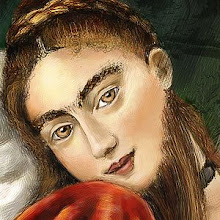
If Catherine shed any tears for her uncle, then she would have had few people to grieve with her. Florence mourned Clement's death by raiding and vandalizing his tomb. People did have reason to be angry. Clement had left behind a legacy of higher taxes and inflated grain prices. Most damaging for Catherine, he also left behind her unpaid dowry. Francis was now stuck with an unpopular, Italian daughter-in-law without a cent to her name, prompting him to make the remark, “the girl has come to me stark naked.”3 Three years after the marriage, Catherine was also failing at her sole purpose as wife to Henri II – she had yet to become pregnant. It was roughly during this time that Henri began his affair with the infamous Diane de Poitiers (shown here) more on her later...

A Damsel in Distress
So let’s recap. Catherine is stuck in France with no money, no blue blood, and no little Henri’s running around. Her husband has taken a mistress and her uncle has died. (But she does have great shoes.) How could Francis secure the Valois line if Catherine did not become pregnant? The logical solution would be for him to replace his daughter-in-law with a more fertile and politically advantageous bride. The Guise brothers began campaigning for Louise of Guise as the replacement wife. Years earlier in England, Henry VIII had kicked Queen Catherine of Aragon to the curb and swapped her for Anne Boleyn. What was to stop Francis from doing the same to Catherine?

Catherine knew her situation was doomed so she went to Francis begging him to at least let her serve the new queen as a lady-in-waiting. Luckily, Francis was a big softy for a damsel in distress. He said, “It is God’s will that you should be my daughter and the wife of the Dauphin. So be it.”4

Amen. So Catherine stayed put and set herself the task of becoming pregnant.


A Bitter Pill to Swallow
First, Catherine applied poultices of ground up stag antler and cow dung…a guaranteed remedy for infertility. When that didn’t work, she tried drinking large quantities of mule’s urine. (belch) Catherine even drilled holes in her chamber’s floor so that she could spy on her husband and his enigmatic mistress, Diane de Poitiers. Unfortunately, the peep show taught Catherine little in regards to fertility and much more than she needed to know about her husband’s passion for his mistress. After ten years of trying everything imaginable…time was running out.

The Fertility Doctors comes a Knockin’
Finally, the 16th century version of a fertility doctor, named Doctor Fernel was brought in and he diagnosed a slight irregularity in the couple’s reproductive organs. He prescribed a cure to which Henri and Catherine followed. I wish I could tell you more about this cure, but history doesn’t know what voodoo magic he used. All we know is that it worked fabulously. After 10 years of cow dung and sex education, Catherine gave birth to Francis II on January 19, 1544. Over the following years, she would give birth to 9 more children. Not too shabby for a mere "merchant's daughter."

Peace at last...Hardly
Although Catherine secured the succession, peace was still out of her reach. A royal cat fight was brewing between the two leading mistresses of the French court – Diane de Poitiers (mistress of the heir to the throne, Henri II) and the Duchess D’Etampes (mistress of King Francis I). Who will be the last strumpet standing??? I wouldn't put my gold coins on the aging king's mistress. All it takes is one kick of the bucket...and M. D'Etampes is out on her arse. Stay tuned for next post to see who comes out on top.

A full list of sources will be given at the end of Catherine de Medici's story

Notes:

(1) Pope Alexander VI was poisoned in 1503 after drinking poisoned wine which had been intended for the Cardinal de Corneto. The Venetian ambassador reported that it was the"the ugliest, most monstrous and horrible dead body that was ever seen, without any form or likeness of humanity” - de Rossa, p.151.
(2) The inscription on Clement's tomb read, 'To Clement the Seventh, Pontifex Maximus, whose invincible valour was only exceeded by his clemency.' The vandals changed the inscription to read, 'To Inclement, Pontifex Minimus whose conquered valour was only exceeded by his avarice.'
(3) p. 48. Frieda
(4) p. 58. Frieda


Tuesday, October 21, 2008

Haunted History: Cats, Crones, Foul Air & Black Kings

As Halloween approaches, I am seeming more and more of the ubiquitous inflated goblin or ghoul poking their balloon heads out from behind my neighbor’s bushes.1 And of course, because I love history, it has got me thinking about what people feared in the past. What were the boogie men of 16th century Europe? Ghosts may have roamed the graveyards, but what other scary creatures would frighten the kiddies out of their candy corn. Here is my short list of the scariest things of the 16th century:

Cats
I had blogged in the past about how dogs ruled royal palaces. Well, while dogs were whooping it up in the 16th century, cats were trying to escape kitty persecution. Unlike dogs, cats were seen as weak and feminine. Scariest of all, they were linked with witchcraft because they were believed to be really witches in disguise called familiars. Cats were so demonized by the Catholic Church that they were even ritually slaughtered on All Saints Day. (The Pope endorsed the past time with religious zeal) And it wasn’t just the Catholics that persecuted cats. At the succession of the Protestant Queen Elizabeth I, an effigy of the Pope made out of a wicker basket was set on fire. Inside the basket were helpless cats. This especially horrid display of kitty cruelty was meant to signify the releasing of demons. It really only released a dead cat smell.

Old people
I love the seniors but I have to tell you...old people of the 16th century were downright creepy (especially old women). Little medical care, rampant disease, sketchy hygiene, and death in child birth all added up to an average life span of 35 years in London. Yikes. I would be over the hill by now. But some lucky folks did manage to buck the system and live into their 70s and 80s. It was these wizened octogenarians that scared the daylights out of the Elizabethan kids. We can imagine that someone who made it to 70 might have looked like they were about 100. Some historians have even argued that aged midwives became an easy target for the witch hunts because they not only used herbs and delivered babies, but also typically lived on the outskirts of society with little male protection. Everyone basically thought these ancient midwives must be sippin the witch’s brew and bathing in baby’s blood to live that long. (Most of the witches put to death were over 50) It was this fear of old people (otherwise known as Gerontophobia) that led to many an innocent senior getting hung or burned for witchcraft.


Philip II
There is a reason why Philip always dressed in black and never smiled in his portraits. The King of Spain was one scary bad ass. Under the regency of Catherine de Medici and the later rule of her sons, France spent most of the 16th century tip toeing around Philip trying not to piss him off and get embroiled in a war they couldn’t win. Elizabeth I had to continuously avoid plots from Spanish assassins trying to off her. And for the rest of the world (especially the Netherlands), there was good reason to fear Philip. Spain was a Catholic superpower whose military might was continuously fed by the pilfered gold and silver from the Americas.2 You would think all this gold might put a smile on Philip’s face, but he was too busy chasing the Protestants out of the country to enjoy his booty. It was rumored that the only time Philip smiled was after he heard of the slaughter of Protestant men, women, and children at the St. Bartholomew’s Day massacre. Now there’s a guy that you might not want to take a candied apple from.

Foul smells
As a young boy Henry II of France was held captive in a Spanish prison with his brother. When he was finally released, the constable of Castile gave him two white horses as an apology for his imprisonment. In response to this token of goodwill, Henry promptly turned around and unloaded the only ammunition that he had on his young frame…he farted in the constable’s face. Innocent childhood prank? Hardly. Smells were deadly. The ruling medical theory from the 16th to the 19th century was that bad air carried diseases. For this reason, women wore pomanders filled with sweet scents close to their body. And to avoid plague infections, doctors wore long beaks filled with sweet smelling incense to mask the smell of death and disease. Looking like a parrot may have saved their noses, but hardly their immune systems.

(1)I personally find inflatable Halloween props much scarier then anything on this list.
(2) Elizabeth’s Pirates stole a good chunk of it.

Sunday, May 11, 2008

Royal Yummy Mummy

This week, in honor of mother’s day, I am featuring the truly captivating and beautiful, yummy mummy, Eleanor of Aquitaine. Eleanor was born in 1122 and had 10 children including two kings of England, Richard I(Richard the Lionheart) and John. Today, having 10 children alone would qualify you for some serious respect on mother's day. But Eleanor survived more than just the dangers of child birth.


Here is a bit of information about this facinating queen:

Mice of Men
Eleanor married Louis VII and became queen of France in 1137. Eleanor and Louis could not have been more different. Louis was quiet and religious and could often be indecisive. Eleanor was vivacious, bold, loved adventure and craved the romance of courtly love. Her love of adventure sent her on the crusades to the Holy lands with Louis. (Louis had more religious motives.)

It wasn’t long before Eleanor was bored out of her mind with her lackluster marriage and begging for a divorce. Eleanor was not the type of mom to stay home and pray while her husband bungled wars. She wanted to be free. At the time, Eleanor had only given birth to two girls in 15 years of marriage with Louis. (some historians have inplied that there was not much action in the royal bedroom). Louis needed a son. He was eventually convinced that he must remarry to get an heir. The pope granted Eleanor her annulment and she literally galloped as fast as she could away from France and into the arms of husband #2, the 18-year-old Plantagenet stud, Henry II. Eleanor was 30 at the time…practically washed up for the 12th century.

The Cougar tries to tame the Lion
Eleanor had traded in her dull, pious hubby for a hotheaded philanderer. Eleanor certainly cared for Henry, but their temperaments ultimately clashed. Eleanor resented Henry’s many affairs and Henry could not tolerate Eleanor trying to run the show.

Who needs a man to rule
Eleanor and Henry had eight children before Eleanor decided to leave and set up court in Poitiers. Surrounded by troubadours and artists, she educated her sons on the art of both love and war. For five years Eleanor flourished. These were Eleanor’s golden years, but her independence was not to last. Trouble started when Henry ordered her to turn over the province’s tax revenues to his treasury. Eleanor refused.

Never mess with a man’s mom
When Henry and Eleanor butted heads over Poiters' taxes, she put her years of mom power to good use. She incited her sons to rebel against their father. Henry was having none of it. He put down the rebellion and locked Eleanor up. Eleanor was imprisoned until Henry died in 1189. Set free at the ripe, old age of 67, she continued to arrange marriages, put down rebellions and offer support and advice to her children. Now that is a super mom.

Eleanor died in 1204 at the age of 82.

In a time where queens were merely baby mills, Eleanor was not a woman to take a back seat to the men in her life. But her unconventional quest for power meant that her reputation had to suffer through scandals and rumors. After her death, historians even wrote that she was a demon. In reality, her combination of sexuality and power simply sat uncomfortably on the thrones of England and France.