







The obvious answer to this week’s quiz is garlic, but garlic may have been the one food that could cure a vampire.
The word vampire was first recorded in the Oxford English Dictionary in 1734, a year after an insidious disease had erupted throughout the Old World. Symptoms of this unexplained sickness included bad breath, sensitivity to light, dementia, aggression and eventually death. No one was safe and no one could figure out the cause. Romanian peasants described the epidemic as nosferatu, a term derived from the Greek nosophorus, meaning ‘plague carrier.’ Before long, the word vampire came into 18th century lexicon and a cottage industry of Hollywood dramas and teen literature was born.
Today we know the disease that ravaged Europe’s population as pellagra, a vitamin deficiency of niacin and tryptophan. One food is now believed to have caused it.
The mystery food that led to vampirism
If you look on any food box in your cabinet you will probably find the food that caused pellagra. Its derivatives are listed as dextrose, dextrin, xanthan gum and a bunch of other scary chemically modified foods. It is the number one food crop grown in America and our first known genetically engineered diet staple. You can find it in everything from soda to crackers and it may even someday power our cars.
What is this mystery food? Scroll down for answer…
What is this mystery food? Scroll down for answer…
Keep scrolling you scrolling fool.
Studies show that scrolling is the best way to tone your wrist.
Work it
Work it
You're too sexy for this blog.
too sexy for this blog.
too sexy for this blog
too sexy for this blog.
too sexy for this blog
oh….you are looking better already.
Answer: The indigenous Americans called it maize, but we know it as corn.

A Brief history of Corn
Ancient mesoAmericans may have been a little slow discovering the wheel, but they sure knew how to whip up a good batch of corn. Corn did not sprout out of the ground with its sunny kernels begging for some butter. Maize was originally an inedible weed-like grass that was crossbred with a wild grain called teosinte. After a series of genetic mutations….voila corn on the cob. But corn still needed a little more coaxing to make it digestible so indigenous Americans soaked the maize in ashes of lime in a process known today as nixtamaliuzation. They called it Nahuati (which sounds far more magical and is much easier to spell).
 This last step was VERY important!
 This last step was VERY important!
Enter my favorite guy Columbus. He brought maize to Europe and everyone loved it. It was easy to grow. It packed a high caloric punch and it soon became the staple food supply for most of rural Europe. Unfortunately, Columbus and the rest of his marauding thugs forgot the instructional booklet on how to grow maize and Europeans skipped the nixtaumaluzation process. Bad move. What resulted was a bunch of crazed lunatics in need of some serious Flinestone vitamins. By skipping the last step, the maize essentially prevented the body from naturally absorbing niacin. The disease that resulted was pellagra and it bore a eerie resemblance to vampirism.

Sensitivity to Light
Remember when Bram Stoker described the Count’s skin as of “an extraordinary parlor"? Vampires throughout legend have always been sensitive to light, but were they really suffering from pellagra? One of the first symptoms of pellagra is an increased sensitivity to light with shiny, paper-thin skin following any exposure to sunlight. Hmmmm.... coincidence?
Vampire fangs
Pellagra victims also suffered from a swollen, red tongue and inflamed reddened lips which made them look like they had just chugged a big blood fruit smoothie and forgot to wipe their mouth. The swollen tongue may have also resulted in tooth imprints on the tongue and lips that could appear to be caused by....fangs.
Dementia
Things get really fun in the later stages of pellagra when grandma starts acting wacky and eating the family pet. Pellagra victims suffer from insomnia, anxiety, depression and a desire to eat strange things. When a person has unnatural food craving caused by vitamin deficiencies we call it pica, but to an 18th century peasant it looked a lot like their loved one had gone to the dark side.
Death
Pellagra is not always a quick death. Victims slowly become anemic due to gastrointestinal bleeding. When a person becomes anemic, they lose weight, get paler and paler and appear as if the blood is getting sucked right out of them. In Dracula, everyone suspected Lucy was being drained of her blood, but maybe she was just eating too many corn chips in bed?

Springtime for Vampires
In Stoker’s Dracula, Jonathan Harker is warned as he enters Transylvania that, ‘it is the eve of St. George’s Day. Do you know that tonight, when the clock strikes midnight, all the evil things in the world will have full sway?' Stoker had done his research. According to legend, vampires would gather at the edge of the village on St. George’s Day in late April for their annual vampire convention. Springtime was not only mardi gras for vampires, it was also the worst time for pellagra victims. Before new crops could be harvested, cornmeal was often the only food source for a typical peasant resulting in increased cases of pellagra.

Garlic
So where did we get the myth that eating garlic keeps away vampires? Well, if you were living in an impoverished village where all your friends and family were turning into vampires then eating garlic may have been the one food that could save you. Eating garlic actually prevents niacin deficiencies and may have prevented pellagra.
So our superstitious ancestors may have been smarter than we think when it comes to living with vampires. Let that be a little raucous history for your teen (or you) going to see the latest Twilight movie. Stay away from the popcorn or you could return a vampire. (insert evil/geeky laugh here)
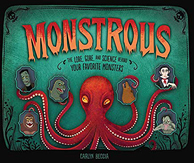
 Love monsters? Read more about the Science and Lore behind your favorite monsters with Monstrous: The Lore, Gore, and Science behind Your Favorite Monsters. In stores Fall 2019
Sources and Further Reading
Standage, Tom. An Edible History of Humanity, Waterville, Me. : Thorndike Press, 2009.
Pellagra and the origin of a myth: evidence from European literature and folklore, Jeffrey S. Hampl & William S. Hampl. JOURNAL OF THE ROYAL SOCIETY OF MEDICINE, Volume 90 November 1997


