





Showing posts with label Anne Boleyn. Show all posts
Showing posts with label Anne Boleyn. Show all posts
Thursday, September 30, 2010
On the Tudor Trail


Thursday, April 29, 2010
Royals in Miniature
These sculptures by G. S. Stuart have so much character. He seems to capture a touch of wry humor behind each royal. Here are some of my favorite ones:


Anne Boleyn
Just wait until I get my hands on that Jane Seymour

Catherine de Medici
Those kids of mine are exhausting.

Duchess of Kendal
Has someone seen my breakfast?

Caroline of Brunswick
This dress will surely raise my husband's blood pressure

Nell Gwynne
"Pray, good people, be civil — I am the Protestant whore."
Yes, I am sure they don't need my captions, but I couldn't resist. There are plenty more over at this minisite dedicated to George Stuart and you can learn more about the Historical Figures Foundation here.
Let me know which ones are your favorite.
Tuesday, October 6, 2009
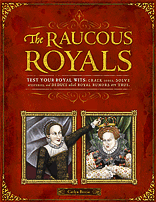
Winner of The Raucous Royals giveaway
Congratulations to Kimberly of Kimberly Eve Musings of a Writer. Her article on Anne Boleyn was chosen as the winner of The Raucous Royals favorite royal contest hosted by Everything Tudor. You can read her article here:
http://kimberlyeve.blogspot.com/2009/10/writing-competitions.html
And here is another article on my favorite royal Elizabeth I
http://kimberlyeve.blogspot.com/2009/09/many-faces-of-elizabeth-i.html
http://kimberlyeve.blogspot.com/2009/10/writing-competitions.html
And here is another article on my favorite royal Elizabeth I
http://kimberlyeve.blogspot.com/2009/09/many-faces-of-elizabeth-i.html
Wednesday, August 12, 2009
Alison Weir podcast on Anne Boleyn
Here is an interesting podcast from Alison Weir on why Anne Boleyn got such a raw deal.
Tuesday, May 19, 2009
The Execution of Anne Boleyn: The Prophecy of Merlin fulfilled?

Today marks the anniversary of Anne Boleyn’s death. The following account details her execution from a Spanish report:
Immediately the executioner did his office; and when her head was off it was taken by a young lady and covered with a white cloth. Afterwards the body was taken by the other ladies, and the whole carried into the church nearest to the Tower of London. …Thus, he who wrote this billet says that, according to old writings, he has seen the prophecy of Marlin fulfilled.(1)
 The Prophecy of Merlin
The “prophecy of Marlin” refers to the prophecy of Merlin (16th century people couldn’t spell)*. These prophecies were printed in Geoffrey of Monmouth’s Book of Merlin in his Historia Regum Brittaniae. The book first appeared in the 12th century and chronicled the history of the Britons and the predictions of the wizard Merlin from the Arthurian Legend. One of these prophecies foretold that Henry should take power from Rome, ‘root out from the land all the razored skulls;’ and should neither spare, “man in his rage nor woman in his lust.” (2)
Sibyllic prophecies
During the 16th century, prophecies in England existed in two major forms. The first was Sibyllic in which initials, numbers and puns represented someone’s name. An example of a popular Sibyllic prophecy was, ‘that A B and C should sit all in one seat, and should work great marvels,’ (3) The A and B supposedly stood for Anne Boleyn while the C stood for either Cromwell or Cranmer.
Another prophecy printed in a book of prophecies featured a poisoned ink drawing illustrating a male figure labeled as “H” and two female figures labeled, “K” and “A.” The H figure obviously stood for Henry while the K and A figures stood for Henry's two dueling wives, Katherine and Anne. Unfortunately the A figure was missing her head. (Anne saw the drawings, but dismissed them as “bauble”. )
Another example of a popular Sibyllic prophecy during Henry’s reign was:
“When hempe is ripe and ready to pull,
Then, Englishman, beware thy skull.” (4)
The word “hempe” was meant to signify the beginning initials of England’s monarchs. H represented Henry VIII, E represented Edward, M represented Mary, P represented Philip II who supposedly shared in the prediction by marrying Mary, and E represented Elizabeth.
Galfriedian prophecies
The second popular form of prophecy was called Galfriedian, and employed the use of animals and other living creatures to represent a person. An example of a popular Galfriedian prophecy (and far less flattering to Anne ) was:
‘when this Cowe rideth the bull
than priest beware thy skull.’
The cow represented Henry VIII and the bull represented Anne Boleyn.
The prophecy that came true (sort of)
Another popular prophecy might have come true if Henry had followed through with the harsher punishment for traitors of burning. This prophecy, whose origins are unknown, predicted that a queen of England should be burnt at the stake. After the honeymoon phase had ended with Henry and the happy couple started to bicker, Anne might have taken this prediction more seriously. In an argument with Henry she told her husband that it had been said that a queen of England would be burnt but, “even if I were to suffer a thousand deaths, my love for you would not abate one jot’. (5) I wonder is she would have still felt this way with her head missing?
Prophecies, like rumors, are interesting to dissect because they often reflect the people’s fears and hopes. Stay tuned for a future post on the predictions of Elizabeth Barton, The Holy Maid of Kent.
*ok, they could spell, but their spelling was not confined to an alphabet of 26 letters nor any strict spelling convention. If you were to step back in the 16th century and tell Elizabeth I that she couldn't spell she might say, God's teeth! and send you along your way as a crazy person. For a further description of the Tudor alphabet - Read the The Raucous Royals by yours truly.
Notes:
(1) 'Henry VIII: May 1536, 16-20', Letters and Papers, Foreign and Domestic, Henry VIII, Volume 10: January-June 1536 (1887), pp. 371-391
(2) Mackay, p 281
(3) Dodds, p4
(4) Mackay, p 281
(5) Starkey, Kindle location 7161
Sources and Further Reading:
Mackay, Charles. Extraordinary Popular Delusions and the Madness of Crowds, New Yorkm, NY: Three Rivers Press, 1995.
Starkey, David. The Six Wives of Henry VIII. New York, NY: Harper Perennial, 2004.
Political Prophecies in the Reign of Henry VIII, Dodds, Madeleine Hope, The Modern Language Review, Voll 11, No. 3 (Jul., 1916) pp. 276-284.
Ives, Eric. The Life and Death of Anne Boleyn, Malden, MA: Blackwell Publishing, 2005.
Wednesday, May 13, 2009
Anne Boleyn's infamous B Necklace
 For the Tudor junkies, I found this beautiful B necklace over at the Anne Boleyn Files. I have to confess that I got my B necklace several years ago. (no surprise there!).
I was at a bar one night getting teased relentlessly by friends for being such a history geek. My sister bet me that no one in the bar would know the meaning behind my necklace. I took her up on her bet because even history geeks go to bars. Well, I lost the bet. The answers I got were:
A. Bruins (pleeeease)
B. Boston Red Sox (most common)
C. Boston (acceptable)
(This was before the show Ugly Betty was on)
ah well. I like living in my little Tudor history bubble.
Monday, April 13, 2009
Details of Anne Boleyn's incestuous relationship with her brother now online
 Documents on the opening of Anne Boleyn's trial are now online at the National Archives for the first time. (scroll down to KB 8/9). This opening includes accusations of Anne's adultery and incest with her brother in which the famed queen supposedly, "tempted her brother with her tongue in the said George's mouth and the said George's tongue in hers." ewwwwww. Too yucky to be true? Most historians think so and even the Spanish Ambassador Chapuys predicted George's acquittal.
Theories continue to differ on why George Boleyn got pulled into the messy business of Anne's downfall. Here are just a few...
The deformed fetus theory
Before Anne's arrest she had supposedly given birth to a deformed male child which according to historian Retha Warnicke, Henry saw as a clear sign of evil incarnate. This deformed fetus led to Henry's conviction that Anne was a baby killing witch and his marriage was doomed. In the 16th century, incest was closely associated with witchcraft so accusing Anne of incest made Anne's execution justifiable in the eyes of a very religious and superstitious king. Even though there is little evidence that Anne gave birth to a deformed fetus, Warnicke gives readers an interesting glimpse into how witchcraft shaped beliefs toward women.
The Anne as victim theory
Eric Ive's believes that few defenses were written about Anne during her trial or after because, "if Anne was 'noble', 'virtuous' and 'worthy', Henry had been a either a monster or a gull." Anything that hurt Anne's reputation, vindicated Herny. Sounds a little too black and white to me, but obviously Henry wanted Anne's reputation dragged through the mud. Along that same line of thought, George Boleyn was merely a helpless casualty in the mission to defile poor sweet Anne. Maybe.
 The Henry as Tudor mob boss theory
In my opinion, John Guy and David Starsky suggest the most plausible theory. Henry felt Anne had crossed him and good old Hank was MAD....and certainly mad enough to lash out at Anne's brother. Revenge may sound too simplistic, but Henry may have honestly believed that Anne had committed adultery. Supposedly, Anne had also spoken of Henry being impotent - an act of treason. During George's trial, he had been instructed NOT to read out loud these accusations. But what did silly George do? He brazenly read out loud the tawdry rumors of Henry's impotence. I am pretty sure that calling a man bad in bed to his entire court tends not to lead to clemency.
 Obviously, the 16th century idea of revenge was far more violent then it would be today so we have to be careful when making comparisons. But even by 16th century standards, Henry demonstrated a propensity for being a real jerk. Let's remember poor Margaret Pole (shown here), a feeble, old woman sent to her death for her son Reginald Pole's treasonous acts against the crown. Margaret had denounced her son's actions and had always been a loyal servant to the crown even serving as godmother and governess to Henry's daughter Mary. But Henry wanted to send a message to Reginald....mess with me and your whole family gets wacked! Tony Soprano would have been proud.
 Appearances are everything
I would also add that Henry was very sensitive to his reputation at court and to the rest of the world. At the time of Anne's downfall, Henry had fallen for Jane Seymour—a woman he saw as the antithesis of Anne. Henry may have wanted to thoroughly tarnish Anne's reputation to create a contrast between Anne as witch and Jane as godly. A new reign was about to begin and Henry wanted his people to accept his new wife and their future heirs.
What do you think? Why was George Boleyn dragged into the trial?
Sunday, February 22, 2009
Who stole the Love Letters of Henry VIII to Anne Boleyn? Part II
 In last week’s post, I offered three possible suspects in the theft of Henry VIII's love letters to Anne Boleyn. If you read this blog regularly then you probably already figured out that I am up to my old tricks....I don’t think any of the suspects is our thief.
The clue to who did steal them may even be in one of the letters themselves.
Letter XV
Darling, I heartily recommend me to you, ascertaining you that I am a little perplexed with such things as her brother will declare to her. Wrote in his last that he trusted shortly to see her, "which is better known at London than with any that is about me; whereof I not a little marvel, but lack of discreet handling must be the cause thereof. I hope soon "our meeting shall not depend upon other men's light handlings, but upon your own.
Written with the hand of him that longeth to be yours
H.R.
 It is well known that intercepting letters was a common occurrence in the French and English courts.* On August 20th, 1528, shortly after Anne had returned to court, the French ambassador, Du Bellay makes reference to the breach of security in a letter to the Constable of France, Montmorency. He says, “Mademoiselle Boulan has returned to court. The intercepted letters that you sent me about this matter have disquieted them” (1). Was Henry reference to “lack of discreet handling” an indication that he knew his letters were being read? And what would the French court have to gain by reading Henry's love letters?
The Greatest of Enemies or Friends?
Any sort of affair that could tarnish Henry's reputation abroad was only bound to weaken his position politically too. Most importantly, Henry with a male heir was a far bigger threat to France than Henry with just a daughter. In short, the French had nothing to gain if Henry remarried and produced a heir. Perhaps a French spy for Francis I sold the letters to Clement believing that it would force Clement to denounce Henry. If a French spy did steal the letters, then they underestimated the pope’s desire to rule on the matter. As discussed in last post, Pope Clement VII needed time not evidence in the King’s Great Matter.
Who do you think stole the letters?
*Political letters with sensitive information were often written in cipher.
Notes:
(1)Letters and Papers, Foreign and Domestic, Henry VIII, Volume, August 1528
Wednesday, February 18, 2009
The Love Letters of Henry VIII to Anne Boleyn
 Letter I
My mistress and friend, I and my heart put ourselves in your hands. Let not absence lessen your affection; for it causes us more pain than I should ever have thought, reminding us of a point of astronomy that the longer the days are, the further off is the sun, and yet the heat is all the greater. So it is with our love, which keeps its fervour in absence, at least on our side. Prolonged absence would be intolerable, but for my firm hope in your indissoluble affection. As I cannot be with you in person, I send you my picture set in bracelets, with the whole device, which you know already, wishing myself in their place, when it shall please you. This from the hand of your loyal servant and friend
H Rex
In letter I, Anne has left court with Henry panting in her wake like an abandoned puppy. Henry calls her “My mistress and friend,” but the word "mistress" did not have the same connotations as it does today. It was a polite term of address and did not imply a sexual relationship.
Henry also throws in a bit of science to impress his lady friend and likens his passion to the sun being farther away yet still making their days long and hot. This line gives us an interesting glimpse into what was believed about the seasons for Henry actually got the science part right. (The earth is tilted away from the sun in June when it is summer in the northern hemisphere…and yes I had to look that one up because I slept through 3rd grade science). Henry probably picked up this factoid from his astronomer, Nicholas Kratzer.
The picture set in bracelets was made my Hans Holbein the Younger. Portrait miniatures had become a popular art genre and were often exchanged as a token of friendship or to woo a young lady.
Ok so let’s recap. The man knows his jewelry and his science AND he just happens to be the king. Will Anne fall for his sweet letters and gifts? Will her absence make Henry’s heart grow fonder?
Stay tuned for next post to find out.
Thursday, February 12, 2009
Who stole Henry VIII's love letters to Anne Boleyn?
 In 1529, English authorities stopped Cardinal Campeggio in Dover on his way out of England. Although he refused to have his bags searched, the locks were broken on his coffers. Unfortunately, the king’s men failed to find what they were looking for. (1) Were authorities looking for the love letters from Henry VIII to Anne Boleyn? These 17 love letters mysteriously resurface in the 17th century in the Vatican collection. Who stole them and how they came to Rome is a mystery that has puzzled historians for years.(2)
 Suspect #1: Pope Clement VII
At first blush, Cardinal Campeggio or a papal spy for Pope Clement VII seems the obvious suspect. But what would the Pope have gained by stealing the letters? Clement never desired evidence for or against Henry. Clement’s strategy was to keep stalling Henry in the hopes that either the matter would resolve itself (Henry would tire of Anne) or someone else would have to deal with the matter (Clement would be too dead to care.) Even the French Ambassador, the Bishop of Tarbe, voiced his frustration at Clement’s repeated stall tactics in a letter to King Francis I. Tarbe writes that Clement “has told me more than three times in secret, he would be glad if the marriage was already made, either by a dispensation of the English legate or otherwise, provided it was not by his authority” (3) Caught in the middle of Charles V and Henry, Clement's strongest weapon was procrastination. The letters would have done little to serve his cause.
 Suspect #2: Charles V
Charles V probably had the biggest motive to steal the letters. He was bitterly opposed to the idea of his aunt being kicked to the curb and her daughter Mary being declared a bastard. The court gossip and Spanish Ambassador, Chapuys wrote to Charles at least once a week with tales of Henry and Anne's palace romps. Chapuys held nothing back in his communications with Charles and several of his letters would have been damaging if they had been intercepted. Yet, nowhere does he mention stealing the letters.
And even if Chapuys had stolen them, Charles V would have never shipped the originals off to the Vatican. He trusted Clement about as much as we trust a CEO with some bailout cash. If he had the letters, he would have made copies of them and sent those to Clement.
Suspect #3: Freelance Spy
The biggest motivation behind stealing the letters was not religion, but money. Whoever stole them probably was trying to make a quick buck. Maybe they were even sold directly to the Vatican. Perhaps they were even stolen from Hever castle years after Anne was dead and buried. It would not be the first time that love letters resurfaced years after they were written. Either way, the Pope (either Clement or subsequent Popes) had no use for them. But we…. have tons of use for them. As discussed in last post, the love letters not only give us clues into one of the most infamous torrid love affair in history, but also give us a peak into Henry’s motives behind his divorce.
Who do you think stole the letters?
Stay tuned for next post when the individual letters will be analyzed.
Notes:
(1)Letters and Papers, Foreign and Domestic, Henry VIII, Volume 4, 25 Oct. 1529
(2)The theories presented here can be found in: Ridley, Jasper, The Love Letters of Henry VIII. pp 17-18
(3)Letters and Papers, Foreign and Domestic, Henry VIII, Volume 4, 27 March. 1530
Sources and Further Reading:
Ridley, Jasper. The Love Letters of Henry VIII, University Printing House, Oxford, 1988
Starkey, David. The Six Wives of Henry VIII. New York, NY: Harper Perennial, 2004.
Ives, Eric. The Life and Death of Anne Boleyn, Malden, MA: Blackwell Publishing, 2005.
Weir, Alison. The Six wives of Henry VIII, New York, NY: Grove Press, 2000.
Fraser, Antoinia. The Six wives of Henry VIII, New York, NY: Vintage, 1993
Monday, February 9, 2009
The Love Letters of Henry VIII: Part 1

Background:
In the spring of 1527, Henry VIII began questioning the validity of his marriage to Catherine of Aragon. Always the theologian, the king turned to Leviticus as proof of his unnatural union. Scripture conveniently stated that anyone who married his brother’s wife would have no children. Bingo. Henry had done just that by marrying Catherine, his brother Arthur's widow and now he desperately needed an heir. So Henry sent his minions running off to Rome to seek a divorce from Catherine in what had become the King’s ‘Great Matter.’ Yet somewhere between guilt and the desire for a do-over, Henry met the enigmatic Anne Boleyn and decided to make her his queen.
 Why Snoop?
The 17 love letters from Henry to Anne span two very different time periods in their courtship. They begin with the heady first days of infatuation to the tender promises of two betrothed lovers. Unfortunately, the letters are undated leaving historians to grapple with the most important question of all – when did their affair begin? This question leads to a far weightier question: Did Henry seek a divorce from Catherine of Aragon to ease his conscience and secure an heir? Or was Henry’s burning desire to extricate himself from his marriage influenced by the burning desire in his nether regions?
If we assign an earlier date to the letters, Anne becomes the catalyst that ended Henry’s marriage and the impetus behind the whole English Reformation – surely a heavy cross to bear. If we assign a later date to the letters than Henry’s motive to divorce Catherine lies in his own troubled conscience and his even more troublesome need for an heir to protect the future of England. Antonia Fraser, Eric Ives, and Alison Weir believe Henry first noticed Anne at Shrovetide in 1526 and the love letters soon followed. Starkey believes the affair could have started as early as 1525. Who is right? And even if the affair did begin in 1525, how much did Anne influence Henry to begin divorce proceeding? I will be exploring all theories in the next posts.
 How we got the letters
The love letters resurfaced in the 17th century in the Vatican Archives probably stolen from Anne’s residence at Hever Castle. The letters do contain several clues as to when they were written, but how they are numbered does not. When they first came to the Vatican, some disgruntled archivist took the thin velum and transferred them to Parchment and numbered them in either random order or the order in which they were found. Throughout the next week’s posts, I will be referencing the letters by their numbers, but keep in mind that this is not the order in which they were written.
Where are Anne's letters?
The letters are also very one-sided because none of Anne's letters to Henry have survived. Most likely, Henry destroyed her letters, along with her portraits, when he ceased to need mementos of their affair. Henry could have also destroyed the letters as soon as they were read because the rules of courtly love deemed it indiscreet to save love letters. (It was especially tacky if the love letters were not from your wife.) But considering that Henry hated to write letters, we are lucky to have any relics of his love affair with the mysterious Brunet.
Stay tuned for next post on who stole the letters.
Art Note: Picture of Henry VIII's writing desk from the Victoria and Albert Museum
Wednesday, February 4, 2009
Unrequited Love – Henry VIII and Catherine of Aragon
 Whenever I think of unrequited love, I think of the intractable Catherine of Aragon who refused to be pushed aside for Henry VIII's mistress, Anne Boleyn. Catherine even went to her deathbed with only forgiveness in her heart for the king who had caused her so much pain. Her death fits into the Raucous Rumor of the month...
Rumor: Anne and Henry wore yellow to mourn the death of Catherine of Aragon because it was the color of mourning in Spain. Some accounts report both Anne and Henry wearing yellow to show their respect. Some accounts report just one wearing yellow.
Possible Source: This rumor has been floating around the internet for some time. Its origins are not completely unfounded. Edward Hall, the chronicler, reported that Anne wore yellow for mourning.
The Truth:
After Catherine's death, the Spanish Ambassador, Chapuys, wrote a letter to Emperor Charles V stating:
“On the following day, Sunday, the King was clad all over in yellow, from top to toe, except the white feather he had in his bonnet, and the Little Bastard (Elizabeth) was conducted to mass with trumpets and other great triumphs. After dinner the King entered the room in which the ladies danced, and there did several things like one transported with joy.” (1) Parenthesis added by me
Chapuys was well aware that yellow was the color of jubilation. In the inventory for the Accounts of the Revels, there are numerous examples of yellow velvet and yellow satin being ordered for the ladies’ dresses to celebrate the royal festivities. Interesting, Anne was pregnant at the time of Catherine’s death and had decorated her confinement room in yellow ochre. Hall's reference to Anne wearing yellow to mourn may have been merely a sarcastic jab at Anne's lack of grief for Catherine’s death. (2)

Either way, the color of mourning in Spain was black, not yellow. When Juana the Mad’s husband died (shown above), she ordered all her ladies to wear black. When she herself died, Charles V wore black. And when Philip II died, a proclamation ordered by his son, Philip III sent the country into mourning. In Seville, so much black fabric was sold that it created a black market on black clothes. (no pun intended) In fact, when Chapuys was invited to attend Catherine’s funeral, he was offered black cloth to mourn his beloved queen, not yellow.
Sorrowful Tears or Dancing on the Grave?

We can only guess as to why Anne and Henry were callous enough to wear yellow. Henry was certainly relieved at the death of his ex-queen for it meant that he no longer had to fear any meddling from her nephew, Charles. Catherine’s death signified a brief respite from the fear of Spanish invasion. For Anne, it signified the death of her greatest rival.
There seems to be this trend lately amongst Annophiles to raise the tragic queen up to sainthood as a woman incapable of any blame. I personally don’t see any figure who usurps another women’s position as a feminist role model. Whether you choose to see the controversial Anne Boleyn as harlet or heroine, neither Henry nor Anne were feeling twangs of compassion over Catherine's death. The two lovers were as joyous as their yellow attire.
Stay tuned for next week when we snoop into the love letters of Henry VIII to Anne Boleyn....
Notes:
(1) SP January 1536, 21-25, 141. Chapuys to Charles V, 21 Jan.Vienna Archives.
(2) Warnicke, p. 188
Sources and Further Reading:
Warnicke, Retha M. The Rise and Fall of Anne Boleyn. New York, NY: Cambridge University Press; Reprint edition (July 26, 1991).
Starkey, David. The Six Wives of Henry VIII. New York, NY: Harper Perennial, 2004
State Papers Online
Sunday, December 28, 2008
Strangest Royal Gifts in History
 With Christmas now over, there are probably some bizarre gifts still lingering under many a half-dead tree. But chia pets, self-help books and nose hair clippers don’t compare to some of the more exotic gifts given to royalty throughout history. The following are some of my favorite.
Cute and Cuddly Gifts
King Manuel I of Portugal went for the big box when he gave Pope Leo X, a rare white elephant named Hanno. Leo fell in love with his large gift and used his new pet to lead ostentatious parades through the streets of Rome with a silver tower on his back. For years Hanno reciprocated the Pope’s love and would cry “bar bar bar” every time he saw Leo. Unfortunately, Leo may have loved his pet pachyderm a little too much. The gold-enriched laxatives fed to Hanno were a little too rich for even an elephant’s stomach. Hanno dropped dead after one of these royal treatments.
 The “oh you shouldn’t have” gift
At the wedding of Catherine de Medici, Pope Clement VII gave King Francis I, a unicorn horn mounted in a solid gold pedestal. These slightly phallic edifices were not intended to match the furniture, but were instead valued for their medicinal qualities. A unicorn or “alicorn” horn would supposedly sweat in the presence of poison. Unfortunately, the mythical horns were actually rhino and narwhal horns and often cost about as much as a small estate.
Honey…Look what I killed for you
Having an animal carcass arrive on your doorstep may seem like a less than romantic gift but to 16th century princes it was a most tender gesture of love. Henry VIII may have wooed Anne Boleyn with love letters and jewelry, but it was the freshly killed stag that really made her go….awwwww ain’t that sweet.
Royal Re-gifting
Every proud papa likes to give gifts to his daughter on her wedding. King Philip IV was no different when he bestowed several priceless jewels on his daughter Isabella after her marriage ceremony to Edward II. Unfortunately, Edward immediately re-gifted Isabella’s jewels and sent them to his royal mistress. This re-gifting might not have been so insulting if it were not for the fact that Edward’s girlfriend was none other than the pretty boy, Piers Gaveston. Most people would have agreed that Isabella looked better in pearls.
 History tells us that even exotic gifts can be re-gifted. Such was the case with the Turkish corsair and chief pirate of the Ottoman empire, Barabarossa who gave King Francis a rare Nubian lion. In theory, a pet lion may seem like the perfect gift to impress a king, until you have to feed the beast. Francis certainly came to this conclusion when the perpetually hungry lion started eyeing the monkeys, reptiles and exotic birds in the rest of the king’s royal menagerie. Thus, Francis gave the big cat to the cousin of Pope Clement VII, Ippolito de Medici who fell in love with his new pet.
The wife of Louis XV, Maria Leszczynska, received an expensive New Year’s gift – an enamel and gold snuffbox with a small watch on the lid. Unfortunately for Maria, the gift was intended for Louise Madeline de la Motte, the mother of Louis’ famed mistress Madame Pompadour. Fortunately for Maria, Louise had just died and no one wanted to waste the gift.
Sources and Further Reading:
Bedini, Silvio. The Pope's Elephant. Austin, Texas: Harry Ransom Humanities Research Center, 1997.
Knecht, R.J. Francis I, New York, NY : Cambridge University Press, 1984.
Weir, Alison. Queen Isabella. New York, NY: Ballantine Books, 2005.
Ives, Eric. Anne Boleyn. New York, NY : Blackwell, 1988.
Lever, Evelyne. Madame de Pompadour : a life. New York, NY : Farrar, Straus and Giroux, 2002.
Thursday, December 18, 2008
Royal Signatures: What Handwriting reveals about Tudor Kings and Queens
 I recently found a fascinating post over at one of my favorite blogs, My Napoleon Obsession written by artist and history lover Carmi Cimicata. (I too have a bit of a school girl crush on Nappy.) The post shows several examples of Napoleon’s signature and how it changed over time.
Graphologists (the people who study handwriting) will tell you that everyone’s signature changes over time. Your signature even changes from signing one document to immediately signing another. In fact, one of the first signs that graphologists look for in analyzing counterfeit signatures is if the signatures are too identical. Perfection is usually a dead give away that the signature is a forgery.
Now, for those of you who might be screaming POPPYCOCK at this very moment (a word that everyone should use at least once a day), I would point out that handwriting analysis is still used in crime investigations and in my corporate days I even had to undergo a handwriting analysis for a job I was applying too. (I didn’t get the job and have crossed my t’s low ever since). I studied graphology for years before I figured out that it is ten times harder than it looks. I say this with the disclaimer that the following is my novice attempt to analyze some of the signatures of famous Tudors.
First off, graphologists never use a signature alone to analyze someone. Usually, several writing samples have to be considered to get a good impression of overall characteristics. Signatures tend to be more practiced so they reveal clues about the public persona while the handwriting reflects more of the private persona.
Also keep in mind that we don’t have the luxury to see how Tudor signatures changed over time because often their signatures were created as seals to be placed on official documents and reused over and over again. In Henry VIII's case, a dry stamp was used to put his signature on royal documents when he got too lazy to lift his chubby hand. This dry stamp left an imprint which could then be inked in by members of the Privy Chamber. To avoid forgeries, only 3 people were allowed to use the stamp at a time. For this reason, I have not used examples of Henry's signature after 1545.
Ok let’s start with my favorite larger-than-life monarch….
 Henry VIII
You will notice that Henry’s signature is thick in some places and thin in others. Now you might say that this is caused by his choice of writing utensil, but that actually is not so. It’s the passion of the writer that truly determines the thick and thinness of the line. And even the choice of pen can indicate personal desires. The varying thick and thinness of his writing suggesting a varying degree of pressure. Whenever writing varies in pressure, it suggests a more volatile nature. You can see this varying pressure also in the love letter to Anne Boleyn shown below.
A person with varying pressure alternates his need for risk-taking and security. Henry obviously had a very mercurial personality. He would risk everything for the love/lust he felt for his second wife Anne Boleyn, but he then craved the security and domestic calm of Jane Seymour in his third choice of wife. We can see this is very different from the steady pressure that Anne Boleyn applied in her signature. (shown below)
 Another clue that points to Henry’s erratic nature is the varying slants of his handwriting. Even in the love letter to Anne Boleyn we can see the loops on his “d” slant backward yet the other letters slant dramatically forward. People with varying slants are often lively, crave variety (ahh..hmm wives) and have many interests.
 You will also notice a varying baseline in Henry’s love letter to Anne (right). People who write with a varying baseline are the “jack of all trades” type. They take on many challenges and can get burnt out easily. These are not planners, but instead will wait to see what tomorrow brings.
Henry’s signature is also the best example of an illegible signature (by Tudor standards). In fact, all of the other examples here are pretty neat compared to Henry’s signature. A person with an illegible signature keeps his public persona very separate from his private persona. These people are often an enigma and even close friends rarely know them well. (You can now forgive your doctor for his messy signature)
Anne Boleyn
One of the first things that distinguishes Anne’s signature is her heavy pressure. This is a full bodied signature full of passion and sensuality. People who write with a heavy pressure are also forceful, dynamic and possess a tremendous determination. No one could argue that Anne was not determined in her quest for the King.

You will also notice that Anne chose to punctuate her name with “the queen” instead of abbreviating it with the good old Rex symbol. Many people today choose to abbreviate their names using initials for their first name. People who choose to write out every part of their name seek the limelight. These people are always willing to accept a new challenge. Obviously, Anne didn’t shy away from the limelight or the challenge to hold on to the King.
 Another distinguishing characteristic of Anne’s writing is the height of her letters and the way they thrust into the upper zone seen in both her signature and her letters (left). In handwriting analysis, the upper zone represents the intellect. The middle zone represents social interaction or emotional intelligence. The bottom zone is literally are more base cravings…aka sex drive. Anne’s upper zone is very dominant suggesting an extremely clever personality, but her loops and letters are closed at the top which indicates a certain narrow-minded thinking. With these type of people, it is their way or the highway.
You will also notice that Anne’s writing in her letter takes up little space in the lower zone contrasted to Henry’s writing and certainly his signature which dips dips....dips into the lower zone. People with strong lower zones not only have strong sex drives, but also have a strong drive to accomplish all their goals…whatever the means. These people are often restless and are stimulated by variety. (I know again with the variety…ok the man liked variety. You get it)
 Underscoring is another common mark in signatures. Underscoring is a sign of independent thinking. Underscores are a way of adding extra strength to the signature and also symbolize a need for recognition. Notice Anne's strong underscore in her name. Obviously, Anne needed the people to recognize her as queen. The same device can be seen in her daughter, Elizabeth’s signature (left). But you will notice that Anne’s underline moves forward in one direction while Elizabeth’s goes back and forth with loopy garlands. A back and forth underscore is a sign of indecision in the need for independence. We can see this in Elizabeth’s constant battle on whether or not to marry. Could she relinquish control to a king or must the power be all hers? Elizabeth put the offer of marriage on the table several times and then snatched it away the next.
 Elizabeth I
One of the first striking things about Elizabeth’s signature is that it is honking HUGE compared to the rest of her writing. Whenever a signature is large in comparison to the rest of the writing it indicates the person has a lot more invested in the image that he/she projects to the rest of the world. I have already written about how Elizabeth created the Cult of Gloriana by being very careful about the image that she projected.
When Elizabeth was taken to the Tower and imprisoned on orders of her half-sister Mary Tudor we see a very different signature (below). Notice how small her signature is in comparison to her signature when she became queen (right).
 Let’s compare Elizabeth’s letter to that of her cousin, Mary Queen of Scots (below). We can see that Mary’s signature is much smaller in relation to her writing. A smaller signature represents modesty and if it is really tiny it can represent underestimating abilities. Mary certainly chose consistently to take a back seat to the men in her life. A choice she would later regret when her brother and husband #2 and #3 showed disloyalty.
Elizabeth’s signature also has several garlands on both the top and the bottom. Garlands are a sign of affability, but if the writing has too many then it represents the person trying too hard to be accepted. This is the “calculated” friendliness and a person who plasters a smile on their face to appeal to both friend and foe.
You will also notice that Elizabeth’s handwriting has very little slant. This is called an “A-slant” and it reflects a person who has an amazing control over their emotions. This is a person who makes decisions based on reason and is not swayed by emotional outbursts. An A-slant person can often seem cold and heartless when they are actually simply well-guarded individuals.
 Let’s contrast this with Mary Queen of Scots writing and signature which shows the classic “C-slant”. A C-slant person is swayed by emotions and can often make impulsive decisions.

Mary Queen of Scots
Mary's signature and her writing are also very dominant in the middle zone. People who are dominant in the middle-zone can only think of terms in the hear and now. They may have grandiose plans, but they have little success putting them into action. If you believe Mary was involved in all the plots and intrigues against Elizabeth then this fits perfectly with her inability to predict the significance of her actions.
So there you have it. Royal Signatures analyzed by your novice graphologist. Yes, I will admit that many of these signatures and writing samples are hard to analyze in modern context because people wrote differently, but I do think it is interesting to compare them.
Did I at least make you self-conscience about your own signature?
Monday, November 24, 2008
Copernicus Look-a-likes
 I have blogged in the past about misidentified portraits. Identifying portraits is a tricky business. Often art historians will look at the costume, jewelry and props surrounding the portrait. To determine dates, x-rays and carbon dating can be employed. But even after science and the most knowledgeable art historians weigh in, we often still get it wrong. Examples of famous people misidentified include the painting of Lady Jane Grey by Master John (shown here). Susan James was the first to identify this painting as Katherine Parr (The sixth wife of Henry VIII) and not the tragic nine day queen.
By far, the most useless technique in identifying portraits is sometimes our own eyes. It is not enough to say, “portrait A looks like portrait B so they must be the same person.” (I admit that I catch myself doing this sometimes too.) To prove this point, come play one of my favorite games…
The History/Celebrity Look-a-Like Game
What is History Celebrity Look-a-Like you ask? It is only the most entertaining museum game in the history of the art world. The rules are as follows:
Players: 2+
Object: To find people in portraiture that look like celebrities.
Points:
6 points for major celebrities
5 points if their dead
2 points for B- list celebrities
Play: Once a famous person is identified in a portrait, the other player has the right to “contest” the call. Contesting a call requires enlisting the help of a “judge” in the form of a stranger, museum curator or 3rd party not involved in the game. The judge must determine if the celebrity look-a-like call is a bad match. If the match is determined a bad call then the player who made the call loses 6 points. You can only contest 3 calls in one game.
Winner: The person with the most points at the end of the museum trip.
Now that you know the rules, here are some examples that I have found:
Marie Antoinette and Nicole Kidman

Marie Antoinette and Nicole Kidman

I have always thought Nicole Kidman was a dead ringer for Marie Antoinette. This portrait by Austrian painter, Martin van Meytens portrays Marie Antoinette at the age of 12. Nicole's forehead is not as high and she is certainly missing the Hapsburg chin, but there is something oddly Marie Antoinette-like about the Aussie star.
Louis XIV and Paul Stanley

OK I am going to date myself on this one, but Paul Stanley (from the rock band KISS) IS Louis XIV reincarnated.
Nicolaus Copernicus and James Cromwell

I found this one recently on Tudor History.org. It turns out that some sly archaeologists found the remains of Nicolaus Copernicus and used forensic facial reconstruction to make this image of the famed astronomer. I think that they really stole James Cromwell's DNA.
Martin Luther and Bob the Bachelor

Despite the fact that this one is worth only 2 points, I still think it is a good call. Most of you probably won't know who this Reality TV star is unless you watch ABC's The Bachelor. This was Bob The Bachelor (Yes they really called him that) and now I have lost all credibility by admitting that I watch The Bachelor.
Madame de Pompadour and Drew Barrymore


This one got "contested" and I think wrongly so. There is something about these two femme fatales that makes them seem like they could be related in a past life. To prove this point, I have added the Vermilion cheeks and a little grey powder to Miss Barrymore's picture.
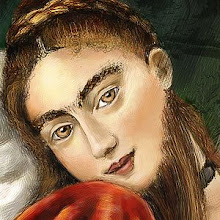
Anne Boleyn and Audrey Hepburn

Although no one knows what Henry VIII's second wife really looked like, in this painting, she is screaming Breakfast at Tiffany's.
I will admit that some of these examples are better than others. But you can see how easy it is for two unrelated people to look similar.

Although no one knows what Henry VIII's second wife really looked like, in this painting, she is screaming Breakfast at Tiffany's.
I will admit that some of these examples are better than others. But you can see how easy it is for two unrelated people to look similar.
What are your favorite Celebrity/History look-a-like?
Sunday, November 9, 2008
The Wise Doctor
 This is my rough sketch illustrating royal doctors and all the wacky medical cures used throughout history. It is for my next book which will be out in 2010 called I Feel Better with a Frog in my Throat. I am not sure if this sketch will make the cut.
 This week’s post features my favorite doctor of the irascible Henry VIII – Dr. Butts. While Henry was courting Anne Boleyn, Dr. Butts was sent to the future queen to cure her of the Sweating Sickness.1 Anne survived thus earning Dr. Butts future job security. (We can take a guess as what his fate would have been if she had died) Dr. Butts then went on to become royal physician to all of Henry’s children and most importantly a good friend to Henry.
Dr. Butts...His name says it all
Being the royal physician in Henry's court was not as prestigious as we may think. The physician's role was secondary to the apothecary who got to do all the fun mixing of pills and potions. Basically, the court physician was a glorified chemist to the King’s bodily excretions. Dr. Butts had the very serious job of making sure the amount of liquids and food that went into the king….came out at the other end. His daily responsibilities entailed examining the King’s urine and make sure it was up to snuff...or sniff.
 Color, Clarity, and…(gulp)Flavor
How do you tell good pee from bad pee? Well let’s start with our handy pee chart for the kids at home.
The doctor would first consult his chart to classify the specimen. We can conclude green pee = very bad. Yellowish pee = good.
Next, the doctor would hold the pee sample up to the light and then diagnose the clarity. Chunky things floating in there = very bad. Clear = good.
Next, the doctor would swirl then taste. (Yes, you really needed to swirl first.) A sweet taste= very, very bad. That meant the person might be diabetic. (they of course did not call it diabetes) Many people have claimed that Henry VIII was diabetic later in life, but I have yet to find any quotes from his doctor saying things like, “King’s pee has a nice floral bouquet to it today” No, most likely the King’s pee didn’t warrant much mention. But if we were to guess what the King’s pee tasted like (just for fun) I am guessing that it tasted pretty rancid with all the meat he was eating.2 Henry VIII also loved artichokes. 3 Enough said.
 Dr. Butts' True Legacy
Dr. Butts should not only be remembered as physician to Henry VIII, but also as the man who secured Holbein’s Henry VIII and the Barber-Surgeons (shown here). This was Holbein’s last work before the plague claimed this great artist’s life.
Notes:
(1) For more information on the Sweating Sickness
(2) When a person eats little fresh fruits and vegetables, their pee gets very dark and stinky. If anyone has been on the Atkins diet then you know exactly what I am talking about.
(3) Artichokes like asparagus give urine a strong smell. Just trust me on this one.
Sources and Further Reading:
Weir, Alison. Henry VIII, The King and His Court, New York, NY: Ballantine Books, 2001
Porter, Roy. Blood & Guts, A Short History of Medicine. New York, NY: W. W. Norton & Company Ltd., 2002.
Magner, Louis. A History of Medicine. Boca Raton, FL: Taylor & Francis, 2005.
Subscribe to:
Posts (Atom)

