Showing posts with label beauty. Show all posts

Wednesday, December 16, 2009

The Top 10 Tips for Surviving Christmas - 17th century-style


I am behind on my research for some posts because I am still recovering from a nasty bout of the Norwalk Virus...otherwise known as the stomach flu...otherwise known at the sickness that will make you never eat again.

In the meantime, here is an interesting article from the Wellcome library on The Top 10 Tips for Surviving Christmas -17th century style (although I could have done without the recipe for a good purge)

Monday, November 23, 2009

Test your wig smarts

I finally have started to get caught up on my sleep and work some more on my next book proposal. It is a subject that I have been researching for the last year, but I am just now starting to pull it together to something that might resemble a book. It is too early to say what it is about, but here are a couple of hints: Hint one: it is dedicated to my daughter who thinks dresses are medieval torture devices and hair cuts are as painful as limb amputations. Hint Two – the quiz below is part of my research.

Anyone who answers the following question correctly will be entered to win Royal Affairs. (last month’s winner never responded to my email). Contest is open to US and International folks.

Which of the following people wore a wig?:

1. Marguerite de Valois
2, Queen Elizabeth I
3. Mary Queen of Scots
4. Louis XIII
5. Louis XIV
6. Charles II
7. Marie Antoinette
8. George III
9. George Washington

Answer to follow in next post…

Thursday, April 2, 2009

Renaissance Beauty Secrets

In one of Shakespeare’s most famous plays, Hamlet scolds Ophelia, ‘God hath given you one face, and you make yourselves another.' Shakespeare was making a reference to Ophelia’s cunning use of cosmetics and he was not alone in his objections. Especially in England, cosmetics were generally mistrusted as sorcery designed to trick helpless men. In essence, Renaissance women faced the same challenges that we do today - they had to look like their beauty was effortless. Unfortunately, to achieve effortless beauty, women had to absorb more toxic ingredients than the average lab rat.

In last week’s post, readers were invited to take the “Are you a Renaissance Beauty” quiz. For all of you that might have been less than happy with your score (including me), here is your chance to redeem yourself. The following 500-year old beauty secrets should have the poets and artists singing your praise.

Disclaimer: The Raucous Royals takes no responsibility for any injury that might result from using these techniques.

Alabaster Skin: Steal the Look (the Renaissance Way)
In medieval times, women bleached their skin using lead pasta, but by the Renaissance, women had got white skin down to an evil science. To look like you haven’t seen the sun in 20 years, first apply raw eggs to your face as a primer. Next, mix together lead and vinegar to make ceruse. Apply it liberally to face and neck.

For a truly corpse-like face, take blue paint and apply thin veins to forehead and breasts. Finish it off with another coating of egg whites and voila…you have been turned to marble.

Tip: For an even fairer look, you could also try the old Renaissance beauty trick of applying leeches to your ears. The leeches would drain the blood from your head giving you that I am about to swoon look.

Warning: Over time, this beauty concoction would cause holes in your face. If patches of your skin start to fall off then immediately apply more lead makeup. If you prefer your skin to not look like Swiss cheese covered in frosting, you may want to try the 17th century beauty trick of applying patches of fabric to the holes on your face. Cut them into stars, moons and circles. Be creative. This is your melting skin.

Plucked: Steal the Look (The Renaissance Way)
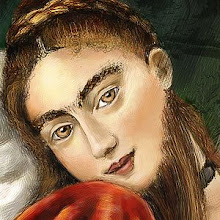
You have probably already noticed something peculiar about Mona Lisa’s mischievous eyes…she is missing her brows. Most women in the Renaissance were pluck-happy with the tweezers. They not only plucked their brows, but also their hairline to give the impression of a wide forehead. Ouch!

White Teeth: Steal the Look (the Renaissance Way)
There were many recipes to whiten teeth in the Renaissance. One recipe advised mixing pumice stone, brick and coal and then rubbing vigorously across the teeth. Crushed bone worked in a pinch too.

We think of Nostradamus as the great profit who predicted the end of the world, but he also wrote a book on beauty secrets. His formula for whitening teeth and freshening breath was the following:

Take three drams each of crystal, flint, white marble, glass and calcined rock salt, two drams each of cuttlefish bone and calcined sea-snail shells, half a dram each of fragmented pearls, two drams of bright riverbed stones (which form little white pebbles), one scruple of amber and twenty-two grains of musk, and grind them down thoroughly on a painter's marble slab. Rub the teeth with [the resultant powder] frequently and gently rub with a little rose honey any places where the gums have receded.In a few days you will see the flesh grow back, and the teeth clearly get whiter.

Warning: If you use these concoctions repeatedly, the enamel will eventually wear off your teeth. No worries. If you live in England during the reign of Elizabeth I then you could follow the latest fashion rage and paint your teeth black. It might not seem appealing at first, but it shows that you (like the queen) can afford the sweets that cause tooth decay.

Beautiful Hair: Steal the Look (the Renaissance Way)
When it comes to Renaissance beauty, blonds couldn't have been having much fun. To get those golden locks apply a mixture of saffron, lemon juice and rhubarb. Next, sit the sun for the WHOLE afternoon wearing a hat with the crown removed called a Solana. (Shown here).

If you had black hair and wanted to get rid of those pesky grays then you could try some of the recipes listed in Isabella Cortese's 1584 best-seller, Secrets. The following recipe must have not only altered your hair, but a few strands of DNA:

Take four or five spoons of quicklime in powder, two pennyworth of lead oxide with gold and two with silver, and put everything in a mortar and grind it with ordinary water; set it to boil as long you would cook a pennyworth of cabbage; remove it from the fire and let it cool until tepid. And then wash your hair with it. After an hour, wash your hair with clean, warm water and no soap, and then wash yourself with ordinary cleaning agent and soap your hair as usual; and do this every week.

Royal Beauty Secrets
Lastly, if the above concoctions don’t have you feeling 10 years younger, then you can steal these beauty elixirs from some famous royals:

  • Catherine de Medici used pigeon dung on her face to get that dewy, young complexion.
  • Mary Queen of Scots bathed in wine to keep herself looking young and fresh.
  • Diane de Poitiers’ fountain of youth was to drink gold. Yummy.

Enjoy!

Thursday, March 12, 2009

Are you a Renaissance Beauty? Take the quiz and find out...

Between perfectly bouncy locks and flawless skin, society today obviously values a pretty face. This beauty ideal is nothing new, but it has been redefined throughout history. Pressure to be beautiful in Renaissance Italy was especially cruel. In essence, Renaissance people were the ultimate victims of the Cinderella tale. Wicked and unchaste women were ugly. Virtuous women were beautiful.

So what secured one woman a lucrative marriage and the next a one-way ticket to the nunnery? Luckily, Florentine writer, Agnolo Firenzuola put into writing the physical characteristics that made a woman beautiful. Take the following quiz and find out if you would be a beauty or a bawd....

Are you a Renaissance Beauty?

1. My forehead is:
A. Twice as wide as it is high
B. Half as wide as it is high
C. About the same in width and height

2. My hair color is:
A. Brunette
B. Red
C. Blond
D. Grey
E. Black

3. My eye color is:
A. Chestnut brown
B. Dark brown
C. Blue
D. Green
E. Hazel

4. My hair is:
A. Straight
B. Curly
C. Wavy

5. My nose is:
A. Short and small
B. Pointed and slender
C. As big as an Italian sausage
D. Upturned at the tip

6. My lips are:
A. Like a tiny rose bud
B. As big as my botox injection will allow
C. Thin

7. When I smile I…
A. Open my mouth wide
B. Open my mouth slightly
C. I don’t dare show my teeth

8. My complexion is:
A. Fair
B. Swarthy or dark
C. Peaches and cream
D. Medium

9. My eyebrows are:
A. Thick and full
B. Very thin and arched
C. What eyebrows? I plucked them off

10. My neck is:
A. Long and elegant
B. Short and stumpy


Score:
1) A = 2, B=0, C = 1
2) A = 0, B = 2, C = 3, D = -1, E=0
3) A= 3, B= 0, C=1, D= 0, E=2
4) A=0, B=2, C=1
5) A=0, B=2, C=0, D=0
6) A=2, B=0, C=0
7) A=0, B=2, C=1
8) A=3, B=0, C=2, D=0
9) A=0, B=2, C=1
10) A=2, B =0


23-17 points
You might have been Leonardo’s muse in another life. But before you get too cocky, remember that you would be positively washed-up by the age of 30. Hope that day has not come yet.

16-10 points
You may need a little help with some tweezers and lead make-up. Stay tuned for a future post on Renaissance beauty secrets.

9-0 points
Sheeesh…. You sure got hit with the 16th century ugly stick? Don’t worry. Perk up that Hapsburg chin and make sure to read the future post on Renaissance beauty secrets.

The Renaissance Beauty Ideal
Beautiful and virtuous women had a fair complexion with blond, curly hair, a long elegant neck and chestnut brown eyes. Their eyebrows were perfectly arched and thin and their foreheads should be twice as wide as they were high. (plucking helped). Our muse should also have a long, slender nose but it should not turn up at the end and her lips should be shaped like a delicate rosebud. She should have perfect teeth, but should never reveal them fully to her suitor. If she had bad teeth then she should keep her mouth closed at all times.

So how did you do?

Monday, August 25, 2008

Beauty Routines

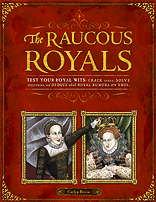
Here are some spot illustrations (below) from my next book, The Raucous Royals which officially releases in (gulp)....one week! These spots are featured in the Louis XIV rumor page - Did the smarmy king bathe only three times in his life? Here is a sneak peek at a sample spread.

I was actually surprised to already see it in Barnes and Nobles this weekend. I was not even expecting it to be carried in stores. Most book stores have one, tiny, half shelf dedicated to young adult history books and they usually only feature US History because you know...the rest of the world doesn't exist for the average 8th grader.

In a few weeks, there will be a few giveaways for the book at pb junkies, cynsations and Scandalous Women. I will let you know when those giveaways are posted.

ok back to the history part...history had some pretty heinous beauty routines. I am posting some more information about other centuries that didn't make the book cut for the inquiring mind.

Just be thankful that you don't have to endure any of the following beauty routines:

The Lead & Mercury Facial Mask
In Louis’s day, both women and men wore a heavy white makeup consisting of mercury, lead, egg whites, and vinegar. Unfortunately, this beauty concoction was poisonous and caused ugly scars and blemishes. To hide the scars, it became fashionable for men and women to wear patches cut into shapes of stars, moons, and diamonds. Small round patches called "black patches" were also worn to make the skin look whiter in comparison.

Bring out the Blue in my Veins
To achieve this, "I am about to faint look," women in Elizabeth I's court painted blue veins over their skin to exaggerate its transparency. Skin so white that it looks blue is where we get the term "blue bloods." (It has also been rumored that the wealthy nobles were called blue bloods because they ingested small amounts of silver when using silver spoons. If you happened to catch the blue man on Oprah then you know there is some debate on whether silver colloid can cause your skin to turn blue. This rumor is unconfirmed and thus never made the book)

The Blood Sucking Body Wrap
When Louis was sick, he was treated to a blood-sucking treatment called bloodletting. Slug-like worms called leeches were applied to the skin and allowed to suck out the blood. It was believed that these leeches cleansed the blood and rid the body of diseases. Leeches do thin the blood, allowing it to flow better, but doctors in Louis’s day got a little carried away and sometimes bled their patients to death.

Wealthy nobles also wore leeches on their ears to suck out the blood and made them look fashionably white. Sometimes they even took leech baths full of blood suckers.

The Puppy Love Purifier
To improve their complexions, wealthy men and women would rub the urine from a puppy on their face. Queen Elizabeth even used urine on her teeth to whiten them. Yummy!

The Squirrel Cheeks Wax Lift
Women would often stick wax balls in their cheeks, called "plumpers" to fill them out. In Louis’s day, a rounded face was considered far more beautiful than a thin one. In fact, the more meat you had on your bones, the better!

The Boil Butt Beautifier
In the seventeenth century, men would often get painful ulcers on their rear ends from the constant horseback riding. Louis XIV got such a bad boil on his butt that he had to have it lanced by his doctor. In an effort to copy the king, Louis’s subjects begged their doctors to cut their bottoms . . . even if they lacked the boil.

The Heart Racing Eye Widener
Italian Courtesans of the Renaissance dropped poisonous Belladonna (Italian for "beautiful lady") in their eyes to dilate their pupils and give them that innocent, deer caught in a headlights look. Unfortunately, Belladonna also increases the heart rate and can cause blindness. Interestingly, nature gives you the same dreamy-eyed look because your pupils dilate when you are attracted to the opposite sex.

What's your favorite beauty routine? Some of these beauty routines have made a come back. Leeches are still used today to promote healing. Urea can be found in many modern cosmetics to soften the skin. And with all the dangers of sun exposure in the media, maybe some day we will even see a return of skin whiteners.