Showing posts with label Louis XIV. Show all posts

Tuesday, March 18, 2014

The lecherous Louis XIV and scandalous life of Emily Post

We tend not to think of the lecherous, red heeled Louis XIV and Emily Post as having similarities, but the two did share one common goal - étiquette.

Louis pretty much invented etiquette to deal with his ill mannered friends. Every time Louis’ courtiers came over to the palace, they would trample the lawn, throw trash everywhere, frolic in the shrubbery, and pee in the fountains. So Louis had the brilliant idea to place little signs or “etiquettes” all over the palace grounds telling people how to behave. And it actually worked. The lawns looked greener, the fountains looked less yellowish, and the shrubbery….well, let’s just say that there was a reason why it was so tall.  


Flash forward many centuries later to the family operated, end-all to be-all on etiquette – The Emily Post institute. 

Emily Post wasn’t the Gatsbyesque miss that most people think of today. She rocked out on her banjo, hobnobbed with Mark Twain, and cared little for what fork to use during the salad course. Her husband had a fondness for chorus girls that culminated in their divorce in 1905. Instead of retreating in shame from the scandal, Post published her best selling Etiqutte in 1922. It is still today the second most stolen book from the library (the Bible is the first.) And while most of its advice would require you to have a maid and a few token butlers, other advice still rings true today. For example;

"Ethically the only chaperon is the young girl’s own sense of dignity and pride; she who has the right attributes of character needs no chaperon—ever."

Dignity and Pride. Not much has changed since Louis XIV demanded people stop peeing in the fountain.

Wednesday, November 25, 2009

Wear a wig? I would rather keep my head

Congratulations to Kary...Winner of the Royal Affairs wigged out giveaway. Only two people got the question right. So here was my very scientific process for choosing a winner - I asked my husband to pick a number between 1 and 2. He picked 2. voila. my winner. The winner just needs to email me your mailing address - info@CarlynBeccia.com

Answer: All wore wigs...except George Washington

1. Marguerite de Valois was born with the Medici dark hair in an era when women went to great lengths to dye their hair blond. Marguerite’s blond wig became so vital to her beauty regime that she only employed blond page boys. The boys would grow their hair long and then cut their hair to be donated to the queen’s coiffure.

2. Towards the end of her reign, Elizabeth I wore wigs to disguise her thinning hair. She owned more than 80 wigs including some blond wigs.

3. Mary Queen of Scots wore an auburn wig. If you got this one wrong, don’t feel bad. Most people living in the 16th century did not know she wore a wig until her executioner was left holding on to her wig instead of her head.

4. Louis XIII wore wigs, called perruques, in his early twenties to cover up his prematurely thinning hair. Out of respect, his courtiers followed suit and the age of wig wearing aristocrats became the norm.

5. In Louis XIV’s early reign he was very proud of his thick, dark mane. Unfortunately, he began to lose his hair later in his reign. He employed 40 wig makers at the court of Versailles during the golden age of wig wearing.

6. Charles II was blessed with great rocker hair and proudly displayed his long, dark locks in the big headed styles of the time. But later when his hair began to thin, he also succumbed to the wig wearing cognoscenti. Charles was even rumored to have had a wig made from the pubic hair of his mistresses.

7. Marie Antoinette preferred her towering hair dos to be created with her own hair. Unfortunately, she began to lose her hair after child birth and was forced to substitute false hair.

8. George III started his reign au natural with his own hair pulled back in a queue (Shown above. Tied back in a pony tail with a ribbon). The wig makers feared that the king’s choice to wear his own locks would put them out of business if others were to copy the king’s example. In response to this fear, they petitioned the king to insist all gentlemen be properly wigged. The petition was viewed as so ludicrous that the guild of wooden leg makers petitioned the king to insist everyone wear a wooden leg.

Later in life, George sported a brown wig that became known as the ‘brown George.’


9. It was probably unfair of me to include George Washington. First, no one's hair should do that naturally (although he did powder it). Second, he certainly was not royalty....which is why he would have never worn a wig. He vociferously supported the ideals of the French Revolution, and preferring to keep his head, was very careful not to copy the styles of headless kings and queens in an age when Americans wanted nothing to do with a monarchy. So like George III, he also wore his own hair in a queue. Poor George probably had enough problems trying to keep his fake teeth in his mouth without the hassles of wearing a wig.

Wigs/false hair are definitely back in vogue today. I am pretty certain that half of Hollywood is wearing fake hair and its only a matter of time before we see kids asking for hair extensions for Christmas. (Don't I sound like one of those crotchety, old bitties that doesn't understand fashion trends? Don't answer that.)

Everyone have a Happy Thanksgiving and wear those hair pieces with pride!

Sources and Further Reading:
Images from the
Lewis Walpole Library
Sherrow, Victoria. The Encyclopedia of Hair: A Cultural History,Westport, Conn. : Greenwood Press, 2006.
Bryer, Robin. The history of hair : fashion and fantasy down the ages, London : Philip Wilson ; Wappinger Falls, N.Y. : Distributed in the USA and Canada by Antique Collectors' Club, 2000.
Corson, Richard. Fashions in Hair, London : P. Owen, 1980.

Thursday, June 25, 2009

La Voisin: A Duchess among Witches

As an independent, sexually elusive 35 year old with flowing robes, suspicious herbal garden, dilapidated residence and proclivity for drinking large amounts of alcohol, Catherine Monvoison, named “la Voisin”, was the 17th century poster child for evil sorceress. Yet, despite her unflattering engraving (shown here) la Voisin was not some badly dressed charlatan scaring the local kids. She was the chief witch to the most influential members of Louis XIV’s court.

Members of the nobility would find themselves at la Voisin’s doorsteps for several reasons. She dabbled in the usual witch fare; tarot card reading, séances, horoscopes, abortions, palm reading, chiromancy, beauty potions, and an occasional aphrodisiac to make a reluctant lover fall hopelessly in love. When M. de Prade sought a marriage with the wealthy Madame Laferon, la Voisin buried a wax figure of de Prade in Madame Leferon’s garden. * Another recommended love spells was to bury menstrual blood. To get rid of an unwanted husband, la Voisin recommended obtaining some of his urine and discarded eggshells from the eggs he had eaten. If urine didn’t work then you better find yourself some pigeon or sheep’s hearts, mummy powder, iron filling, or a mole's teeth to work into a spell.

Ironically, la Voisin hated her husband so much that the typical polite greeting was to inquire whether or not he had dropped dead yet. La Voisin claimed that she never used her spells on her husband and he did continue to live on, but evidence suggests that she may have been "experimenting" with his meals. (Obviously, if she admitted to using her potions she would not only have been accused of attempted murder, but it also would have been bad for business.)

La Voisin's popularity as chief purveyor of potions and spells to the nobility soon earned her the moniker ‘a duchess among witches’, but also fate a less desirable than Psychic to the Stars. On March 1679, la Voisin was arrested on charges of witchcraft. A witch-hunt soon followed with over 400 people implicated in what became known as ‘The Affair of the Poisins.’ La Voisin’s daughter Marie started to talk and favored courtiers with a dangerously close proximity to the king were accused of practicing witchcraft. Some of these names even included Louis’ mistress, Francois-Athenais de Rochechouart, Madame de Montespan and his old crush, Olympe Mancini, comtesse de Soissons.

The accusations stemmed from La Voisin’s less innocuous repertoire involving poisons and love spells using dead body parts and celebrating Black Masses with sacrificial babies. Supposedly, Madame de Montespan paid a visit to la Voisin when she wanted to usurp her rival for the king’s affections, Louise de la Valliere. La Voisin recommended that Madame de Montespan sneak dead baby’s blood, bones, and intestines with a dab of toad and bat parts into Louis’ meat. Yum!

These allegations seem absurd when we consider Madame de Montespan’s extreme piety. To engage in any sinister black magic would have been an extreme crime against the church and dammed her soul. Even more ridiculous was the allegations that Madame de Montespan had sought to poison the king. Killing off her sugar daddy would have seriously cramped her decadent life style. (1)

Madame de Montespan may have experimented with beauty potions and aphrodisiacs such as the popular Cantharides – a medicine scraped from the wings of the Spanish fly beetle. As the pseudonym for sexual sadism, The Marquis de Sade is later remembered for unsuccessfully using Spanish fly to ignite the passions of young prostitutes. (The prostitutes died a painful death). Even George Washington had some Spanish fly in his medicine chest.**

But whether deserved or not, la Voisin is not remembered for harmless beauty potions and aphrodisiacs, but as one of history's great poisoners and raucous trouble makers.The Poison Affair ended with over 34 people executed and several courtiers banished from court. (Olympe Mancini fled in fear for her safety. ) A year after her arrest, la Voisin was burnt to death at the Place de Greve in Paris.

*History doesn’t tells us if these spells worked, but think carefully before you sneak into your neighbor’s garden with a wax doll.
**
Get your mind out of the gutter. Spanish fly was used as a blistering agent to heal George’s throat infection.

Notes:
Fraser, p. 181

Sources and Further Reading

Somerset, Anne. The Affair of the Poisons: Murder, Infanticide, and Satanism at the Court of Louis XIV, New York, NY: St. Martin's Press, 2004.
Fraser, Antonia. Love and Louis XIV: The Women in the Life of the Sun King. New York, NY: Nan A. Talese, 2006.

Saturday, May 16, 2009

The Raucous Royals Book of the Month: Mistress of the Sun by Sandra Gulland

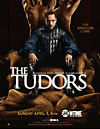
As Showtime’s The Tudors comes to a close, royal junkies might be looking for their next Meyer replacement hottie. Sure...Henry VIII may have had a great calf, but he couldn’t hold a candle to Louis XIV’s delicately hosed gams. As skilled in the hunt as he was performing a ballet, Louis was the metro-sexual hunk of his day and women tended to fall into a helpless swoon in his presence.

One of the women to fall victim to Louis’ charms was Henriette-Anne, Duchess of Orleans. (shown here). Many historians have commented that Henriette-Anne would have made the perfect queen of France ….if she had not been already married to Louis’ brother, Philippe. But a forbidden relationship didn’t stop Louis and Henriette-Anne from spending way too much time together and soon their friendship attracted court gossip and the stern disapproval of Louis’ mother. In 17th century France, it was perfectly acceptable for Louis to have affairs, but not with his sister-in-law. Such an affair (if there was more than a friendship) was viewed as incestuous as having an affair with your actual sister. The scandal was just too much for even Louis. The solution was simple: create a diversion. Enter Louise de la Valliere (nicknamed ‘Petite’) — the unknowing beard to Louis’ indiscretions. But while Louis was trying to throw his mother off the scent, something strange happened. He fell in love with the beard.

Usually, Louise de la Valliere is portrayed as the perpetually teary-eyed, love-sick mistress better suited for a life in the convent than the role of Maitrise-en-titre. In Mistress of the Sun by Sandra Gulland, Petite is no wallflower passively soaking up the Sun King’s attention, but a high-spirited idealists with several alluring talents. She was rumored to be the most beautiful dancer at court despite an injury that forced her to walk with a limp. Probably most impressive, was her skill as a horsewoman. It was said that she could ride a Barbary horse bareback by steering it with a single silken cord. The first few chapters of Mistress of the Sun are dedicated to developing Petite's character as a horse tamer. (She is going to need these talents later when she meets Louis). She develops a special bond with a wild stallion named Diablo until the horse runs amok and causes a tragedy to shatter her happy home life. Petite then meets a handsome huntsman in the forest who turns out to be someone who will change her life forever. In the end, Petite proves to be as fearless on a horse as she is in love. This is a story that needs little fabrication and thankfully Gulland fills in the blanks without distorting the real history behind her characters. And although this is an adult novel, it will also appeal to teens who love romance with a twist of equestrian lore.

As author of the Josephine trilogies, Sandra Gulland’s greatest strength is that she goes beyond weaving great love stories. In her usual meticulous attention to historical details, we also get a glimpse into the opulent court of Louis XIV and the superstitions that governed the era. Some of my favorite details are the superstitious medical beliefs surrounding childbirth. Examples: Enemas were used to widen the birth canal. ouch! Infants born on the third day after the new moon rarely lived. And my personal favorite postpartum treatment - a layer of St. John’s Wort oil followed by a thick rabbitskin lain over the belly. Perhaps other readers will just get swept along in the romance. To me, these little bits of historical trivia are like having a delicious feast that you know won’t make you fat.

This month, I will be giving away a copy of Mistress of the Sun to two lucky readers. All subscribers of the monthly Raucous Royals Newsletter are automatically entered to win. If you are not a subscriber, than you can subscribe here.

Monday, November 24, 2008

Copernicus Look-a-likes

I have blogged in the past about misidentified portraits. Identifying portraits is a tricky business. Often art historians will look at the costume, jewelry and props surrounding the portrait. To determine dates, x-rays and carbon dating can be employed. But even after science and the most knowledgeable art historians weigh in, we often still get it wrong. Examples of famous people misidentified include the painting of Lady Jane Grey by Master John (shown here). Susan James was the first to identify this painting as Katherine Parr (The sixth wife of Henry VIII) and not the tragic nine day queen.

By far, the most useless technique in identifying portraits is sometimes our own eyes. It is not enough to say, “portrait A looks like portrait B so they must be the same person.” (I admit that I catch myself doing this sometimes too.) To prove this point, come play one of my favorite games…

The History/Celebrity Look-a-Like Game
What is History Celebrity Look-a-Like you ask? It is only the most entertaining museum game in the history of the art world. The rules are as follows:

Players: 2+

Object: To find people in portraiture that look like celebrities.

Points:
6 points for major celebrities
5 points if their dead
2 points for B- list celebrities

Play: Once a famous person is identified in a portrait, the other player has the right to “contest” the call. Contesting a call requires enlisting the help of a “judge” in the form of a stranger, museum curator or 3rd party not involved in the game. The judge must determine if the celebrity look-a-like call is a bad match. If the match is determined a bad call then the player who made the call loses 6 points. You can only contest 3 calls in one game.

Winner: The person with the most points at the end of the museum trip.

Now that you know the rules, here are some examples that I have found:

Marie Antoinette and Nicole Kidman
Marie Antoinette
I have always thought Nicole Kidman was a dead ringer for Marie Antoinette. This portrait by Austrian painter, Martin van Meytens portrays Marie Antoinette at the age of 12. Nicole's forehead is not as high and she is certainly missing the Hapsburg chin, but there is something oddly Marie Antoinette-like about the Aussie star.

Louis XIV and Paul Stanley


Louis XIV
OK I am going to date myself on this one, but Paul Stanley (from the rock band KISS) IS Louis XIV reincarnated.


Nicolaus Copernicus and James Cromwell


I found this one recently on Tudor History.org. It turns out that some sly archaeologists found the remains of Nicolaus Copernicus and used forensic facial reconstruction to make this image of the famed astronomer. I think that they really stole James Cromwell's DNA.

Martin Luther and Bob the Bachelor


Despite the fact that this one is worth only 2 points, I still think it is a good call. Most of you probably won't know who this Reality TV star is unless you watch ABC's The Bachelor. This was Bob The Bachelor (Yes they really called him that) and now I have lost all credibility by admitting that I watch The Bachelor.

Madame de Pompadour and Drew Barrymore


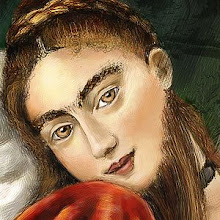
This one got "contested" and I think wrongly so. There is something about these two femme fatales that makes them seem like they could be related in a past life. To prove this point, I have added the Vermilion cheeks and a little grey powder to Miss Barrymore's picture.

Anne Boleyn and Audrey Hepburn


Although no one knows what Henry VIII's second wife really looked like, in this painting, she is screaming Breakfast at Tiffany's.

I will admit that some of these examples are better than others. But you can see how easy it is for two unrelated people to look similar.

What are your favorite Celebrity/History look-a-like?


Sunday, September 28, 2008

Royal Vapors and Foul Rumors

This week’s post is about a dangerous and deadly substance feared and avoided by many royals throughout the 16th – 18th century.

In 1568, Ambroise Pare, the royal surgeon who lived to see the reigns of Henry II, Francis II, Charles IX and Henry III, warned that when this diabolical substance came near an unsuspecting victim, “the flesh and the whole disposition of the body are softened and the pores open, and as a result, pestiferous vapour can rapidly enter the body and cause SUDDEN DEATH, as has frequently been observed.”1 (Emphasis added for my own dramatic effect.)

In 1655, French doctor Theophraste Renaudot expounded upon Pare’s beliefs when he said that this deadly matter “fills the head with vapors. It is the enemy of the nerves and ligaments, which it loosens limbs…2”

What sort of bizarre substance could loosen limbs, soften pores and even cause death? Here are the choices:

A. Plague air
B. Sunlight
C. Eating Vegetables
D.Water


Scroll down for answer….


Keep scrolling you fool


You know you have nothing better to do


Almost there…


Correct Answer: D
Water was the deadly substance in question. Many doctors of the 16th and 17th century would not have advised bathing on a regular basis. In Louis XIV's court, pregnant women were told NEVER to bathe because it was believed to relax the womb. With all this dirt building up, did royals really stink to high heaven? We have a rough idea of what royalty looked like, but what did they smell like?

Kings and queens certainly didn’t bathe every day, but they also didn’t walk around with grime stuck in their fingernails either. In fact, some royals got downright creative when it came to what they put in their bathwater. Here is what some famous people may have smelt like...

Bubbles, Candles and a little Asses Milk
Louis XIV liked a little lavender in his bath. (more on him later)

Henry VIII bathed at Hampton Court with actual heated water pumped in from a stove in the adjoining room. To ease the pain in his sore leg, he soaked in a mixture of herbs, musk and civet . A civet is a small carnivorous cat that supposedly gives off a very distinctive musk. I am not exactly sure what cat musk smells like, but I am not imagining it to be pleasing.

Like many people of his day, Henry also went to bed with a piece of fur so that fleas and lice would jump on it and not on his royal skin. This begs the question....wouldn't the fleas be confused if you smelled like a dead cat?

Mary Queen of Scots bathed in wine. If I ever win the Newbery, Caldecott or get that call from Oprah, I am going to try this one.

While other courtiers were slathering on heavy, white, lead makeup, the mistress of Henri II, Diane de Poiteirs took the au natural approach and bathed in rain-water. All these nature baths must have worked for despite the fact that she was 19 years older than the king, she held him enthralled until his death.

Cleopatra famously bathed in Asses milk to keep her skin youthful and fresh. Ironically, this one may have really worked. Donkey’s milk contains oligosaccharides which increase the number of good bacteria and have anti-aging properties.

While suffering from a "distressing malady" Countess Platen Hanover bathed in milk and then generously donated the diseased milk to the poor. Charity sometimes began in the tub.

Clad in her flannel nightgown, Marie Antoinette bathed in a sweet concoction of pine nuts, blanched sweet almonds, marsh mallow root, Lilly bulbs and a candy paste made from roots and syrup called enula-campana. So Marie Antoinette probably smelled like fresh baked cookies with some floral undertones. Yummy.

PepysMirror Mirror on the Wall....Who is the Dirtiest of them ALL?
Which royals hardly ever bathed? Here’s a whiff into some royal tubs.

Anne of Cleves
The Germans had long shocked the rest of Europe by not washing their hands before eating and bathing infrequently. Henry VIII’s forth wife, Anne of Cleves was no different. Before she was presented to Henry, her advisors worked hard to get the stinky German Princess to take a bath.

Elizabeth I

Rumors abound that Elizabeth professed that she bathed once a month, “whether she needed it or not.” 3 But given Elizabeth's keen sense of smell and her access to the sunken bath that her father built, I suspect she bathed far more often.

Peter the Great
Peter traveled the world learning new customs, but no amount of enlightenment could get the czar practicing good hygiene. He found nothing wrong with relieving the call of nature on the glittering palace walls. These were good times to be a germ. Peter did swear by the curative properties of an occasional natural mineral spring bath, but didn't make a habit out of bathing regularly.

Ferdinand and Isabella
Ferdinand and Isabella didn’t help in the quest toward cleanliness. In Spain, the early Christian doctrines taught that bathing was a corrupt practice that could only lead to…nakedness. Cleanliness was next to Ungodliness. After the conquest of Granada, the Moors not only had to give up their religion to survive the Inquisition, they also had to give up bathing. Isabella and Ferdinand ordered the Moorish baths to be destroyed and bathing was strictly forbidden. When Columbus reported back on the daily bathing habits of the Taino people, Isabella was horrified and commanded her new subjects to stop this blasphemous bathing practice at once.

Isabella boasted that she herself had only bathed twice in her life and I am going to take her word for it.

Phillip II and his Daughter Isabella
Continuing along with the Spanish love of dirt, Phillip II banned the remaining bath houses in 1576. His daughter Isabella because a national martyr to germs when she vowed in 1601 that she would not change her shift until the siege of Ostend ended. Unfortunately, the siege lasted over three years! Eeeeeuw…. that’s an awfully long time to be wearing the same underwear. After three years, her white shift had turned a lovely shade of brown.

Henry IV
Henry’s first wife, Marguerite de Valois complained bitterly about Henry’s lack of bathing worsened by his proclivity to eat large amounts of garlic.

Rub a Dub Dub- My Favorite King and his Tub
One king that always gets accused of being dirty (in more ways then one) is Louis XIV. I have read several trivia type books containing the rumor that Louis XIV bathed “only three or two times in his life”. Search on the internet and you will find this rumor everywhere. But is it really true?

The ruling theory of the time was that simply changing your linen would soak up sweat and dirt. The rich wore tightly woven fabrics like linen and taffeta because it was believed to keep the crawlies and unseen plague away from skin. Loosely woven fabrics like wool were believed to be far less effective in staying clean.

The king’s morning ritual consisted of his hands and face being wiped down with spirits and then his sweat-drenched linen was changed (Louis reportedly sweat a lot). His courtiers then sent him on his way to go to mass, his council meeting, hunt, chase the ladies and work up some more sweat. His linen was then changed a couple of more times throughout the course of the day. In all fairness to this daily routine, most courtiers did not change their linen more than once a day so Louis is already looking pretty clean in comparison.

But if linen didn’t succeed in keeping the king clean, he could always retire to his Appartement des Bains located on the ground floor at Versailles. The Appartment des Bains was a private space created for “informal” meetings and washing. They contained a suite of rooms for disrobing and included an enormous bed situated before a large mirror. (Louis had a bit of a thing for mirrors) Louis would bathe in his long, grey smock of course linen and used a soap made from olive oil. The “cabinet des bains” contained his octagonal bath inset in the marble floor about 10 feet wide and 3 feet deep. It was decorated with Azurian gold, themes of Juno and flanked by marble columns. Pillows adorned the bottom of the bath and a wood burning stove provided heat to the perfumed water that filled it. Sounds like a good time to me.

But now before your minds get all dirty….The Apartement des Bains was more than just Louis’s playboy suite with built in Jacuzzi. It was also his inner sanctuary. As a boy, he spent many lazy hours relaxing with his mother Anne of Austria. According to Anne’s valet, La Porte, Louis would literally jump for joy whenever he joined his mother in her bath. Bathing and cleanliness was an ideal that Anne further instilled in the young boy by always insisting that his hands and fingernails were washed regularly.

Louis was also an avid swimmer and enjoyed bathing in the Seine. In the summer months, Henriette Anne (married to Louis’s brother) and her ladies covered themselves in long shifts and went for a little dunk in the river. You can bet Louis didn't pass up the opportunity to splish splash with the ladies clad in only their shifts. Now, you might argue that swimming doesn’t count as bathing, but in 17th century France, swimming was done to clean the body. Many superstitious Europeans believed that swimming in the open air on the feast of St. John the Baptist would even protect them from sickness. Remnants of this belief still exist today. People might look at you strange if you called your bathing suit a “swimming suit.”

Tracing this Dirty Rumor
Bathing was obviously not a regular occurrence, but Louis washed far more than 2 or 3 times in his entire life. So where did this rumor come from? We will never know for certain how it got started, but I suspect that somewhere along the line Louis’ “medicinal” bath got confused with the frolicking he did in his private quarters. Louis' medicinal bath was given by his personal doctor, Guy-Crescent Fagon, and consisted of bleeding, purging, freezing cold water and the always popular enema. Excuse the bad pun, but simply put…. the sun didn’t shine where they cleaned the sun king. Louis doctors believed it was far more important to clean the inside of the body than the outside. This bath was not the playful splashing of lavender scented water that Louis enjoyed with his mistresses. Louis reportedly felt awful afterwards and allowed this Nurse Ratchet bath to be given to him only twice in his life then promptly swore he would never allow it again. Fagon reported, “The king was never pleased to become accustomed to bathing in his chamber.”4 The key words here are “his chamber.” What happened on the bottom floor of Versailles was an entirely different story.

Another source of this rumor may have been Louis mistress, Madame de Montespan’s, defensive practices against offensive smells. She doused herself in clouds of perfume to mask Louis’s odor. Montespan was not trying to necessarily cover up Louis animal musk, but instead his horrendously bad breath. Brushing teeth WAS a serious problem and best saved for another post….

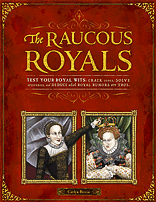
Read more about Louis and his bathing habits in the illustrated picture book The Raucous Royals.

Who is your favorite dirty royal? What do you think they smelled like?

If you would like to learn more about the history of bathing then I highly recommend Katherine Ashenburg's The Dirt on Clean: An Unsanitized History. Although Ashenburg does argue that Louis was amongst the unwashed, I will concede that she is right if you judge him in the context of modern day cleanliness. Overall, her detailed research is undeniably thorough and there are much more intriguing tidbits of bathing history that I did not mention in this post.

Sources & Notes:
(1) Ashenburg, p.94

(2) ibid, p. 100
(3) ibid, p. 99
(4) ibid, p.116

Feydeau, Elisabeth de & Lizop, Jane. A Scented Palace: The Secret History of Marie Antoinette's Perfumer, I. London: I.B. Tauris, 2006.
Albuquerque de , Martim & White, William. Notes & Queries: 2nd S. No. 45 Oct. 25. '56. Oxford University Press, 1856 .
Ashenburg, Katherine. The Dirt on Clean: An Unsanitized History. New York, NY: North Point Press, 2008.
Frieda, Leonie. Catherine de Medici. London: Phoenix, 2005.
Erickson, Carolly. Great Harry. New York, NY: St. Martin's Griffin, 1997
Folkestone Williams, Robert. Memoirs of Sophia Dorothea, Consort of George I. Published by H. Colburn, 1846. Digitized book available.


Louis XIV and Bathing
Louis XIV and Bathing: Hilton, Lisa. Athenais: The Life of Louis XIV's Mistress, the Real Queen of France. New York, NY: Back Bay Books, 2004.

Lewis, W.H. The Splendid Century: Life in the France of Louis XIV, Long Grove, IL: Waveland Press, 1997 .
Pictures of Appartement des bains and recreated rooms accessed online
Ashley, P. Marice. Louis XIV And The Greatness Of France, New York, NY: Free Press, 1965
Levi, Anthony. Louis XIV. New York, NY: Carroll & Graf Publishers, 2004.
Fraser, Antonia. Loves and Lives of Louis XIV. New York, NY: Anchor, 2007.
Mitford, Nancy. The Sun King: Louis XIV at Versailles, New York, NY: Penguin, 1995

Tuesday, September 2, 2008

Royal Bitches: How Dogs Ruled the Palace

Throughout history, kings and queens have often shown their dogs far greater love and affection than their spouses or children. Here are just a few examples where dogs ruled.


Dogs first, People Second

Frederick the Great showed little attraction toward women and had no children. His beloved greyhounds were his real babies. His dogs had free reign of the palace including their own gallery where they could run amuck tearing the furniture to shreds and pooping in every corner. Frederick even erected a magnificent white marble mausoleum to his greyhounds after their death with plans for his own tomb to lie between them. His blatantly, ignored wife, Elizabeth Christine, could only hope for such honors.

Queen Victoria is famous for being "amused" by her dogs, but not so much by her children. To punish her grandson, George V, for his poor table manners, Victoria commanded him to eat under the table like a dog. In an effort to emulate the canine competitor for his mother's affections, George proceeded to remove all his clothing so that he could be (like a dog) unburdened by clothing in his punishment. It doesn’t take a psychologist to discern that Victoria’s children may have felt that they came in second place. Her own emotions toward those bundles of joy were expressed when she said of her babies,

Queen Victoria'til they have become a little human; an ugly baby is a very nasty object...and the prettiest is frightful when undressed...as long as they have their big body and little limbs and that terrible frog-like action.' 1

Perhaps if her babies had been born with fur than her affections may have been different.

Peter the Great was also not much of a family man except when it came to his dogs. He showed little remorse after locking his sisters up in a nunnery and murdering his son, but his beloved dog, Finette was by his side every second of the day.

Dogs in the Bedroom
Dogs were often afforded luxuries that pandering courtiers could only hope for, including coveted access to the monarch’s bedchamber. Peter the Great’s miniature greyhounds slept in his bed sharing vermin and covers.

Catherine the Great’s boudoir was overrun with her husband, Peter’s 8-10 hunting dogs. She complained in her letters of the stench and the little presents they left on her pillow in the form of dog poop.

Napoleon was forced to share his bed with Josephine’s beloved pug, Fortune. During the Revolution, Fortune aided his mistress during her imprisonment in Carmes. The pugnacious pug smuggled secret messages hidden in his collar to Josephine’s children. Later, Napoleon would have to compete for Josephine’s affections with her loyal dog and complained,

‘As if a pretty woman could give up her routine, her friends, her Madame Tallien or a dinner-party at Barras’ house and the performance of a new play of Fortune, yes! Fortune! You love them all more than your husband…’ 2

Fortune put the jealous husband in his place by biting him on the leg.

Doctors in the Tudor age even prescribed putting a dog in bed with their monarch as the cure for stomach cramps. These dogs were called “comforters.” A puppy as a cure may sound like quack medicine, but you could actually view it as the forerunner of the hot water bottle. I personally would take a warm puppy over a hot water bottle or heated pad any day.


Throughout the 16th –19th century, dogs also controlled vermin in the palace and bedroom. (Cats had a hard time finding work because they were considered vermin themselves.) Louis XI took great pride in watching his mice-catching dogs working while he lay in his bed. Queen Victoria had a legendary rat catcher – a Dachshund named Dackel.

Even more important than vermin controllers and bed companions, dogs also protected their owners while they slept. In 1549, the power-hungry Thomas Seymour was planning to marry Princess Elizabeth I and kidnap his nephew, King Edward VI (son of Henry VIII). When Seymour crept into the king's bedchamber, Edward’s loyal guard dog barked furiously alerting his master of his uncle’s evil intentions. Seymour silenced the yapping dog by shooting him dead, but the guards had already been alerted in the melee. Edward might have even pardoned Seymour for his silly rouse, but killing his favorite guard dog was unforgivable. Thomas Seymour lost his head on Tower Green two months later in 1549.

Marie Antoinette’s spaniel Thisbee also slept in her room to alert her of intruders. Thisbee accompanied the family after they were transferred to the Temple. What became of the dog is still unknown.

Dogs at the Dinner table
Louis XIV fed his dogs personally with biscuits baked by his pastry cook. Queen Victoria’s dogs often shared the dining table with her guests. Prince Albert’s favorite greyhound, Eos ate with a fork like a true regal dog.

The painting to the left may look like a typical medieval banquet with rambunctious dogs climbing all over the table, but these dogs were actually food tasters, called chiens-gouteurs. If the dog didn’t die from the royal fare than everyone went ahead and enjoyed their meal. Can you picture it?…”ahh my dog appears to be still breathing. Everyone eat up.”

Dogs in the Stateroom
Dogs could also change the course of politics. Pope Clement VII did not share history’s fondness for the greyhound. Legend has it that Clement was ready to sign Henry’s divorce papers until the English envoy’s greyhound knocked over the stool supporting the pope’s gouty foot. Screaming like Andy Rooney on a rant, the ornery Clement abruptly refused to discuss Henry’s divorce.

Peter the Great forbid any petitions to be presented to him under pain of death. When a courtier was sentenced to the knot, Peter’s wife, Catherine, had the poor man’s petition presented to Peter by attaching it to the collar of the Czar’s favorite dog, Finette. The industrious Catherine knew that only an appeal from Peter’s dog would be granted.

Dogs as Accessories
Henriette Anne of EnglandWe may balk at Hollywood’s trend to carry a dog around like a matching pocketbook, but queens were the first to invent the dog accessory. Royalty often got so attached to their lap dogs that they were literally joined at the hip. Mary Queen of Scot’s executioners was certainly surprised to find her small, Maltese hiding under her skirts after she was beheaded. The dogs of Versailles were taught to carry the noble ladies’ long trains. Not to be undone in the fashion department, dogs also wore regal coats and were heavily perfumed as to not offend delicate noses. And here is a trend that should surely come back amongst Hollywood’s pop princesses….doggy earrings. The poor pooch in this picture of Henriette Anne of England is wearing bright red dangly ones.

Without a doubt, these pampered pets ruled the palace. I have always had the belief that how people treat their pets is very indicative of their true nature. If you are interested in more information about dogs and cats in royal society then I highly recommend MacDonough's Reigning Cats and Dogs. MacDonough's work provides an intriguing look into the courts of some of our most raucous royals illustrated from the perspective of how they interacted with their pets.

Stay tuned for next week when cats get their say on how they ruled.

Source Notes:
(1) p. 120. Farquhar, Michael. A Treasury of Royal Scandal. New York, NY: Penguin Books, 2001
(2)p. 180. MacDonogh Katherine. Reigning Cats and Dogs. New York, NY: St. Martin's Press, 1999.

Monday, August 25, 2008

Beauty Routines

Here are some spot illustrations (below) from my next book, The Raucous Royals which officially releases in (gulp)....one week! These spots are featured in the Louis XIV rumor page - Did the smarmy king bathe only three times in his life? Here is a sneak peek at a sample spread.

I was actually surprised to already see it in Barnes and Nobles this weekend. I was not even expecting it to be carried in stores. Most book stores have one, tiny, half shelf dedicated to young adult history books and they usually only feature US History because you know...the rest of the world doesn't exist for the average 8th grader.

In a few weeks, there will be a few giveaways for the book at pb junkies, cynsations and Scandalous Women. I will let you know when those giveaways are posted.

ok back to the history part...history had some pretty heinous beauty routines. I am posting some more information about other centuries that didn't make the book cut for the inquiring mind.

Just be thankful that you don't have to endure any of the following beauty routines:

The Lead & Mercury Facial Mask
In Louis’s day, both women and men wore a heavy white makeup consisting of mercury, lead, egg whites, and vinegar. Unfortunately, this beauty concoction was poisonous and caused ugly scars and blemishes. To hide the scars, it became fashionable for men and women to wear patches cut into shapes of stars, moons, and diamonds. Small round patches called "black patches" were also worn to make the skin look whiter in comparison.

Bring out the Blue in my Veins
To achieve this, "I am about to faint look," women in Elizabeth I's court painted blue veins over their skin to exaggerate its transparency. Skin so white that it looks blue is where we get the term "blue bloods." (It has also been rumored that the wealthy nobles were called blue bloods because they ingested small amounts of silver when using silver spoons. If you happened to catch the blue man on Oprah then you know there is some debate on whether silver colloid can cause your skin to turn blue. This rumor is unconfirmed and thus never made the book)

The Blood Sucking Body Wrap
When Louis was sick, he was treated to a blood-sucking treatment called bloodletting. Slug-like worms called leeches were applied to the skin and allowed to suck out the blood. It was believed that these leeches cleansed the blood and rid the body of diseases. Leeches do thin the blood, allowing it to flow better, but doctors in Louis’s day got a little carried away and sometimes bled their patients to death.

Wealthy nobles also wore leeches on their ears to suck out the blood and made them look fashionably white. Sometimes they even took leech baths full of blood suckers.

The Puppy Love Purifier
To improve their complexions, wealthy men and women would rub the urine from a puppy on their face. Queen Elizabeth even used urine on her teeth to whiten them. Yummy!

The Squirrel Cheeks Wax Lift
Women would often stick wax balls in their cheeks, called "plumpers" to fill them out. In Louis’s day, a rounded face was considered far more beautiful than a thin one. In fact, the more meat you had on your bones, the better!

The Boil Butt Beautifier
In the seventeenth century, men would often get painful ulcers on their rear ends from the constant horseback riding. Louis XIV got such a bad boil on his butt that he had to have it lanced by his doctor. In an effort to copy the king, Louis’s subjects begged their doctors to cut their bottoms . . . even if they lacked the boil.

The Heart Racing Eye Widener
Italian Courtesans of the Renaissance dropped poisonous Belladonna (Italian for "beautiful lady") in their eyes to dilate their pupils and give them that innocent, deer caught in a headlights look. Unfortunately, Belladonna also increases the heart rate and can cause blindness. Interestingly, nature gives you the same dreamy-eyed look because your pupils dilate when you are attracted to the opposite sex.

What's your favorite beauty routine? Some of these beauty routines have made a come back. Leeches are still used today to promote healing. Urea can be found in many modern cosmetics to soften the skin. And with all the dangers of sun exposure in the media, maybe some day we will even see a return of skin whiteners.